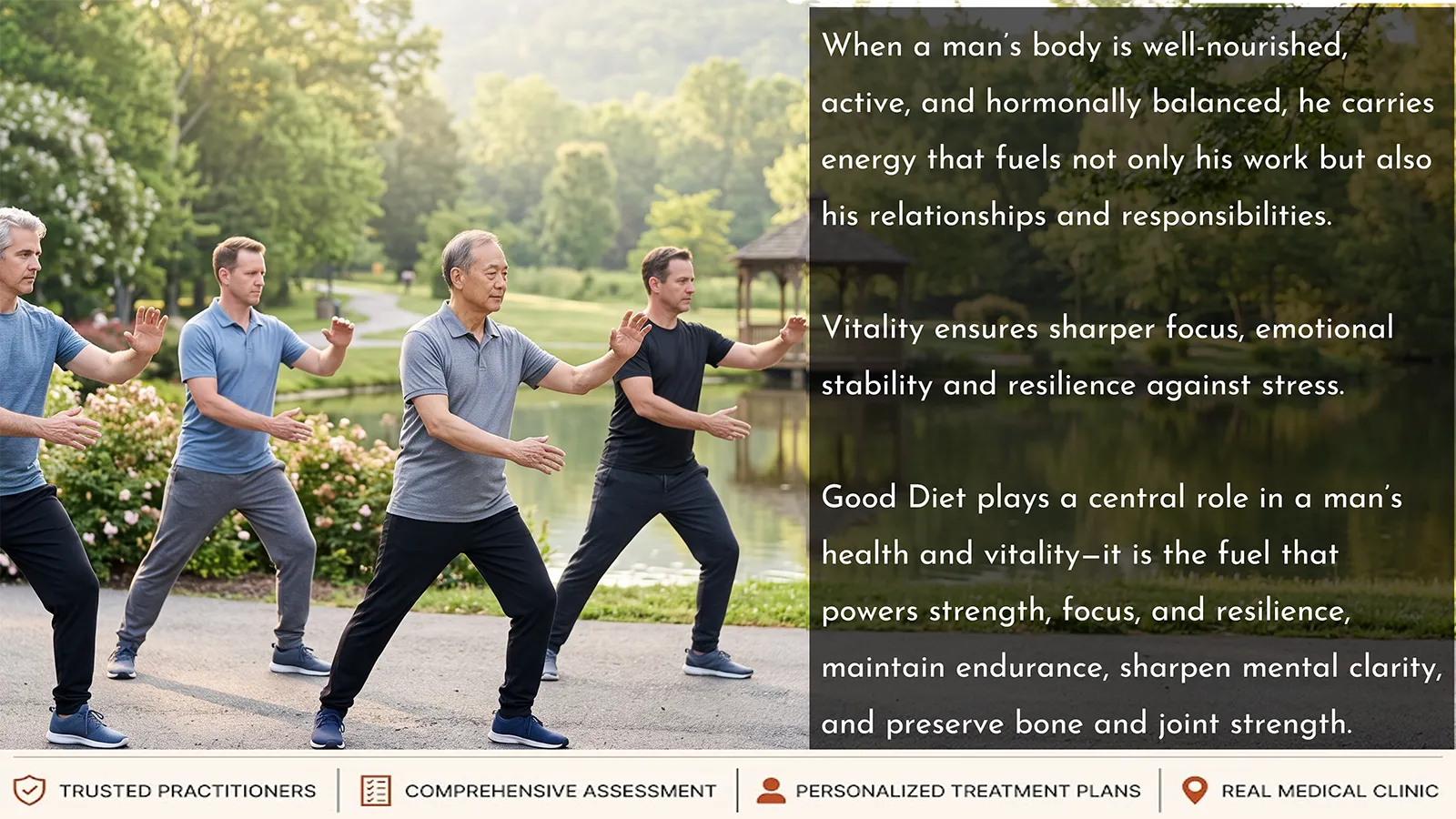
The man everyone leans on
You are often the one holding it all together — the loan repayments, the school fees, the demands of a career, the wellbeing of children and the care of ageing parents. Under that weight, your own health is the easiest thing to defer, and the most dangerous to neglect. The cruel irony is that the very stress of providing — long hours, skipped meals, broken sleep, no time to move — is exactly what wears the body down fastest.
Think of it plainly: your family's security rests on your ability to keep earning, caring and being present for decades to come. That makes your health not a personal indulgence but the single most important asset you are building for them — worth protecting as deliberately as any investment or policy.
The quiet decline no one talks about
Somewhere in the late 30s and 40s, many men notice it: energy that fades by afternoon, a midsection that won't budge, weaker recovery from exercise, flagging drive and focus, and a mood that dips for no clear reason. These are not simply "getting older" — they are signals of shifting hormones, a slowing metabolism and rising inflammation, and they are very much addressable.
Because men so often delay seeking help, these changes are frequently caught late, when they have already compounded into more serious disease. Acting early — while the signs are still subtle — is where the greatest gains lie, both for you and for everyone counting on you.
Testosterone, metabolism and vitality
Testosterone does far more than drive libido: it maintains muscle and bone strength, energy, mood, focus and healthy metabolism. From around age 30 it declines gradually — but modern life accelerates the fall through obesity, stress, poor sleep, alcohol and inactivity, creating a vicious circle in which low testosterone and weight gain each worsen the other.
The result is often the cluster men know too well: belly fat, fatigue, low drive, poor sleep and creeping insulin resistance. Restoring metabolic and hormonal balance — largely through diet, movement, sleep and targeted support — can reverse much of this and rebuild genuine vitality.
The conditions men should not ignore
Men face particular risks that reward early attention: heart disease (which strikes men earlier than women), type 2 diabetes and metabolic syndrome, fatty liver, high blood pressure and cholesterol. Prostate health becomes important from midlife, and stress, anxiety and poor sleep quietly undermine everything else.
Sexual health and fertility matter too, and are closely tied to metabolic and hormonal balance — often improving markedly once the underlying health is restored. These conditions share common roots, which is why a whole-body approach serves men better than treating each in isolation.
Building for the years ahead
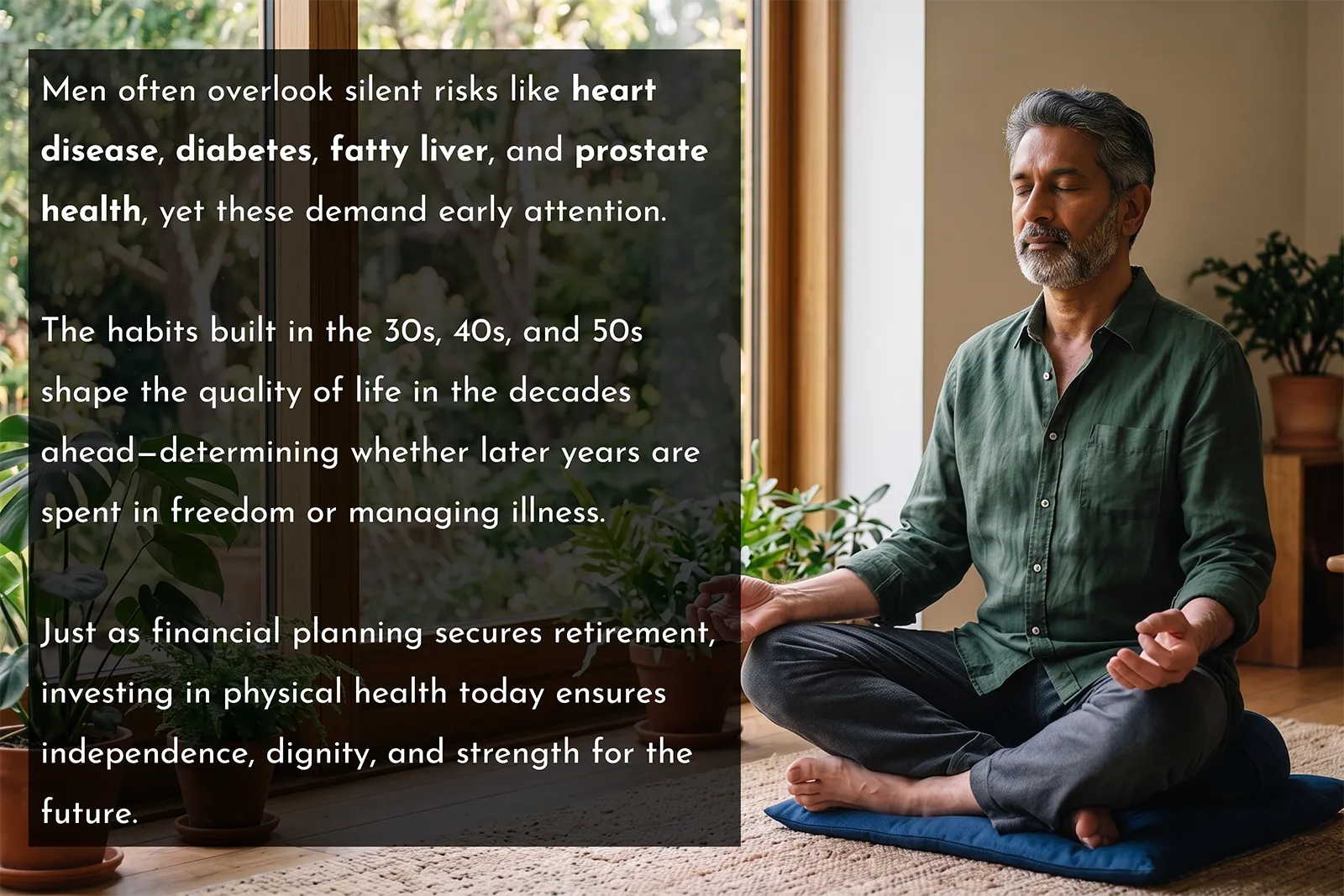
The habits you keep in your 30s, 40s and 50s decide the kind of 60s, 70s and 80s you will have — whether they are spent enjoying your grandchildren, travel and freedom, or managing one illness after another. Every year of good metabolic and cardiovascular health you bank now is a year of independence and dignity later, and one less burden on the children you worked so hard to raise.
Just as you plan financially for retirement, planning for your physical health is the other half of a secure old age. The best time to start was years ago; the second best time is today, and the returns compound for the rest of your life.
The Ayurvedic view of male vitality
Ayurveda has a rich tradition around male vitality. Shukra dhatu — the reproductive tissue — is considered the essence of all the other tissues and a marker of overall strength, while Ojas represents core vitality, immunity and resilience. Vajikarana, a dedicated branch of Ayurveda, focuses on restoring strength, virility and vigour.
When digestion is strong, tissues well-nourished and the mind calm, vitality follows naturally. When Agni weakens and Ama accumulates, strength, drive and immunity all suffer — so the path back to vigour runs through diet, detoxification and rejuvenation, not quick fixes.
How we help
We begin with a thorough assessment — hormones, metabolic and cardiac markers, lifestyle, stress and diet — to find what is really driving your symptoms. From there we build a practical, personalised plan of strength-supporting nutrition, movement, better sleep and stress management, and well-chosen rejuvenating herbs.
The goal is simple and lasting: more energy, healthier weight and metabolism, stronger drive and focus, and real protection against the diseases that shorten men's lives — so you feel, and function, like yourself again, for the people who need you. We work alongside your treating doctors, never in place of prescribed treatment.
We help you identify exactly what your body needs — a thorough assessment of your hormones, metabolism and lifestyle, the best dietary options, and supportive herbs to restore energy, strength, metabolic balance and vitality naturally. To maintain health and fight disease, the body needs the right nutrients, at the right time, in the right ratio.
We work alongside your treating physician — and will never ask you to stop a prescribed medicine on our advice alone. Herbs are medicine, not daily food; what suits one person may not suit another.