We understand what you are carrying
Infertility is never only a medical matter. It can bring anger, guilt, sadness, anxiety and a quiet loss of self-confidence for both partners — often carried in silence. The financial weight only deepens it: a single IVF cycle in India runs from roughly ₹1,00,000 to ₹3,50,000 before medications and tests, and even then the first-transfer success rate is only about 30–35%.
Around 15% of Indian couples face infertility and nearly one in six experience sub-fertility, yet fewer than 1% ever seek help. You deserve better than to struggle alone — and because fertility responds so strongly to diet, nutrition and lifestyle, there is real, practical ground for hope.
The hidden factors we look for
So much of what affects fertility is quiet and correctable. Hormonal imbalance is a leading cause in women — PCOS, high prolactin and thyroid disorders can all disrupt ovulation — and even over-intensive exercise can throw the body's rhythms off. These are exactly the underlying threads we are trained to find and address.
Everyday habits matter more than most realise. Smoking lowers sperm count, motility and form, and reduces ovarian reserve; alcohol can cut the chance of conception by more than half and raise miscarriage risk. Understanding your unique picture is the first step — and it is a step we take with you, not a verdict we hand down.
A gentler wisdom — fertility in Ayurveda
Ayurveda sees fertility as the fruit of a whole, well-nourished body — not a single organ to be forced into action. It teaches that natural conception needs six factors to come into harmony: healthy egg and sperm, timely ovulation, a well-developed and receptive endometrium, a favourable uterine climate, and a well-nourished uterus.
When sedentary living, chronic stress and erratic eating allow inflammatory toxins (ama) to accumulate, that harmony is disturbed for both partners. Restoring it — patiently, naturally, from within — is where our work begins.
How we walk this path with you
Our approach rests on two time-honoured pillars — Shodhan (detoxification) and Poshan (revitalising the organs) — which together create the optimal inner environment for conception. Where IUI and IVF intervene from the outside, we add Aushadh (herbs), Aahar (nutrition) and Vihar (lifestyle) to heal from within, complementing rather than competing with your fertility treatment.
We pair this traditional wisdom with modern diagnostics to uncover the real, underlying causes — assessing your reproductive system, hormonal balance and overall well-being — then build a plan made for you alone: to restore hormonal balance, improve ovarian function, strengthen uterine health and regulate your cycle. This is care designed to give you the very best chance, and to walk beside you at every step.
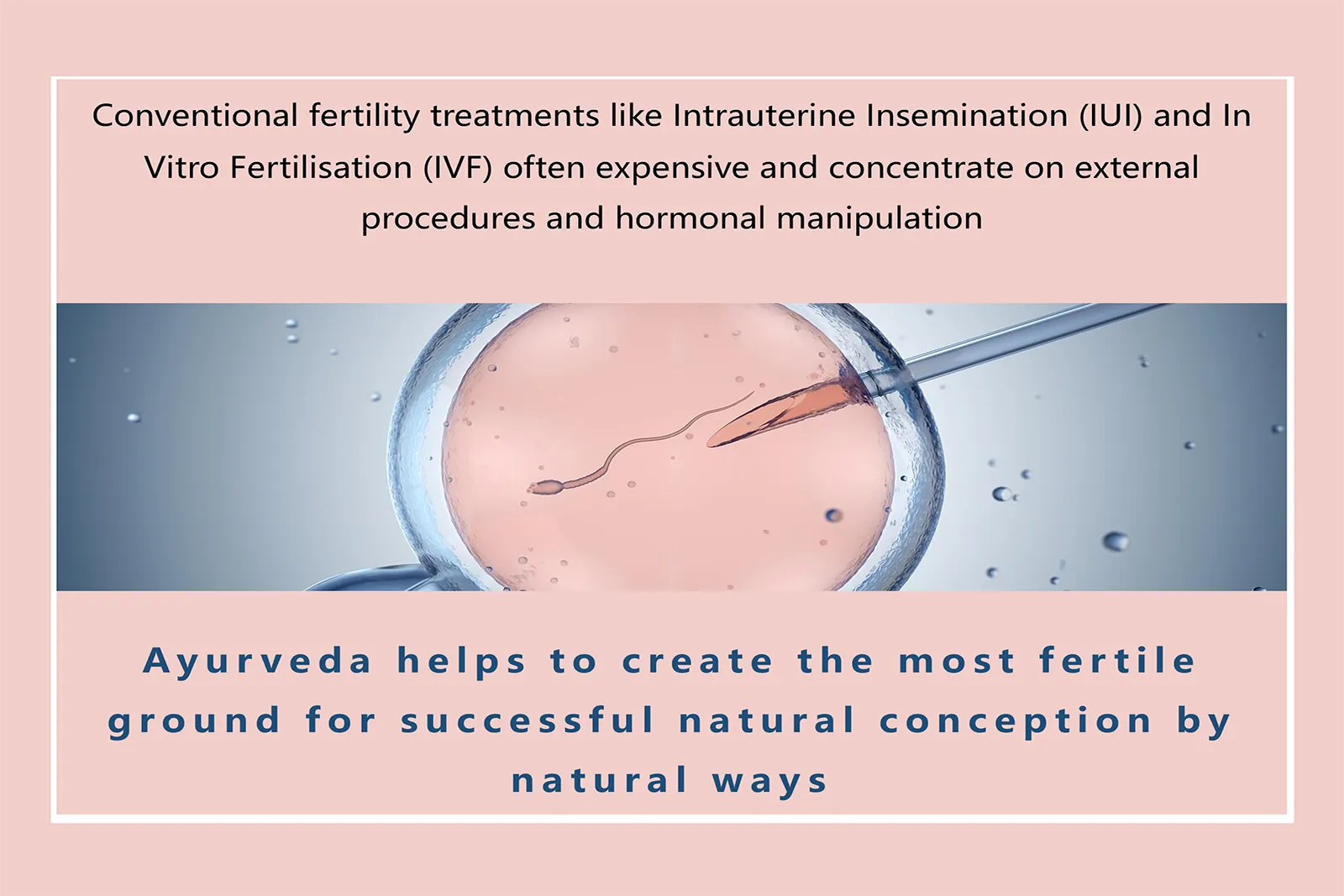
Each person is unique, so treatment is tailored to you. Combining Ayurvedic therapies, herbs, dietary recommendations and lifestyle change, we work to restore balance and improve the conditions for conception — coordinating with your fertility specialist throughout.
We work alongside your treating physician — and will never ask you to stop a prescribed medicine on our advice alone. Herbs are medicine, not daily food; what suits one person may not suit another.