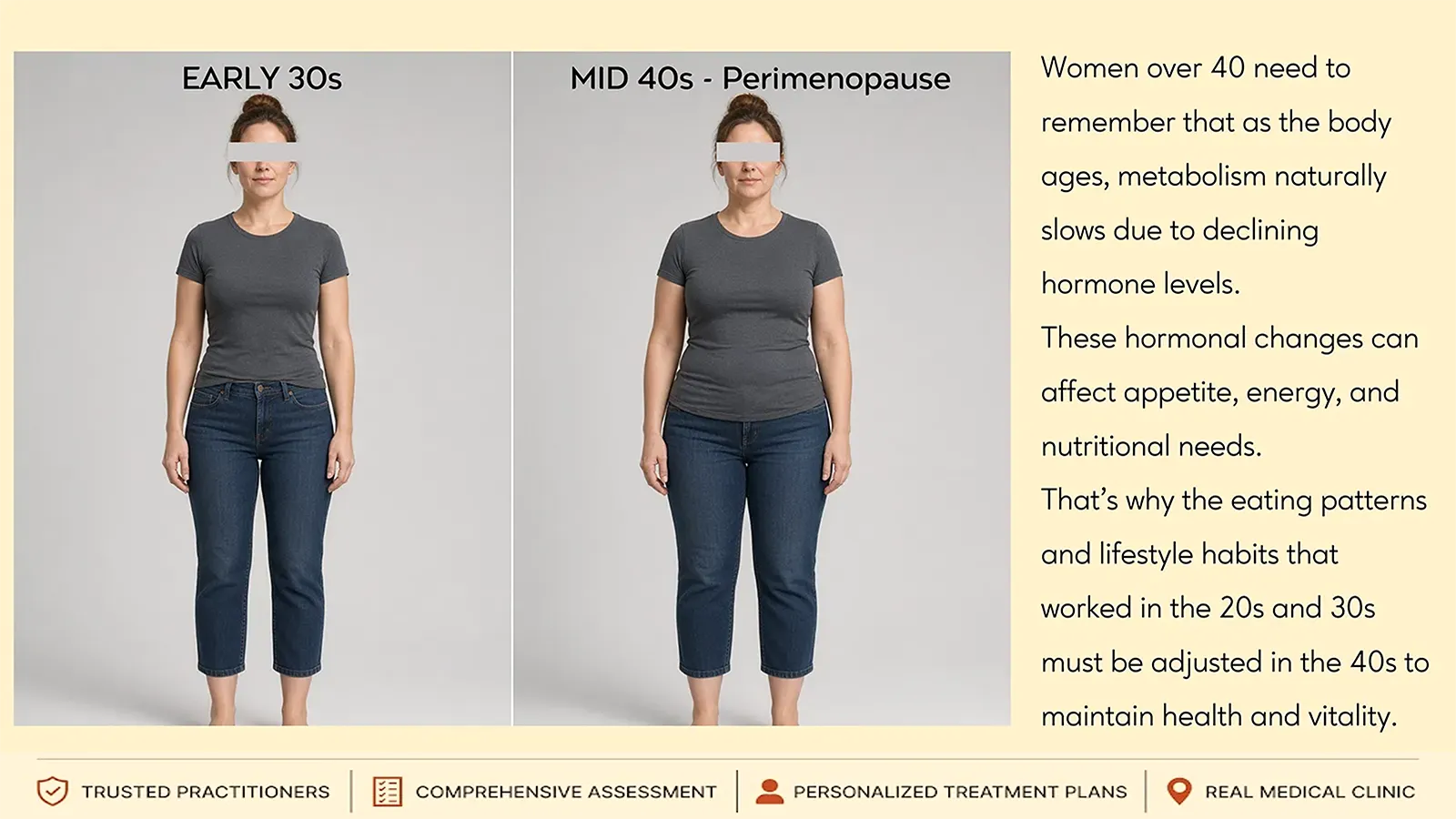
Why your body feels different
As perimenopause begins in the mid-40s, oestrogen starts to decline, and the body begins to reject what was normal in the 20s and 30s. Many women gain weight with no change in eating or exercise, feel their clothes fit differently though the scale is the same, and become tired, irritable and short on sleep, with periods turning irregular and anxiety rising.
The reality is that women simply have to start eating and living differently in their 40s — hormonal fluctuation no longer allows the old habits to work. This is not a failure of willpower; it is a new chapter that asks for a new approach.
What declining oestrogen sets off
Falling oestrogen lowers bone density and raises osteoporosis and fracture risk. Because oestrogen protects the heart — maintaining healthy cholesterol and flexible vessels — its decline worsens lipids and blood sugar over a few years, raising cardiac risk. Oestrogen is also powerfully anti-inflammatory, so its loss can trigger chronic low-grade inflammation that, over time, damages arteries, organs and joints and raises the risk of heart disease, arthritis, dementia and cancer.
Common experiences include hot flashes and night sweats (lasting on average 3.5 to 9–10 years), disturbed sleep, hair thinning, water retention, bladder weakness, unpredictable periods, memory lapses, vaginal dryness and more frequent UTIs.
Weight, metabolism and cancer risk
Weight management becomes harder after menopause: metabolic and body-composition shifts increase abdominal fat, and the risk of central obesity is about five times higher than before. Central obesity, raised lipids, glucose intolerance and hypertension are the main heart-disease risks in menopausal women, and metabolic syndrome is 2–3 times more common than before.
The risk of hormone-sensitive breast cancer also rises significantly in the 40s. The leading modifiable risk factors are overweight or obesity, regular alcohol, and a sedentary lifestyle — with adult weight gain of 20 kg doubling breast-cancer risk.
HRT, and a natural alternative
Hormone replacement therapy helps some women, but others react badly to it. Oestrogen side effects include breast tenderness, cramps, bloating, nausea and headaches; progesterone can bring PMS-like symptoms, fluid retention and mood changes. Systemic menopausal hormone therapy also carries potential risks — of stroke, blood clots, certain cancers, dementia and more.
There is no single solution, but symptoms can be greatly reduced by achieving and maintaining good nutritional status. Very low-calorie diets risk deficiency and gallstones; instead, complex, personalised lifestyle therapy works well — and your normal food, not expensive superfoods, manages this best, with both the quantity and quality of nutrients mattering.
How we help
As Ayurveda doctors, we begin by understanding your whole picture — your symptoms, lifestyle, diet and health history — and the specific imbalances behind how you feel. From there we build a personalised plan of nourishing, everyday food and gentle, well-chosen herbs that ease the transition rather than force it.
The aim is practical and sustainable: steadier energy and mood, better sleep, protected bones and heart, calmer inflammation and a healthy weight — so the 40s become a decade of strength and confidence, and a firm foundation for the years ahead.
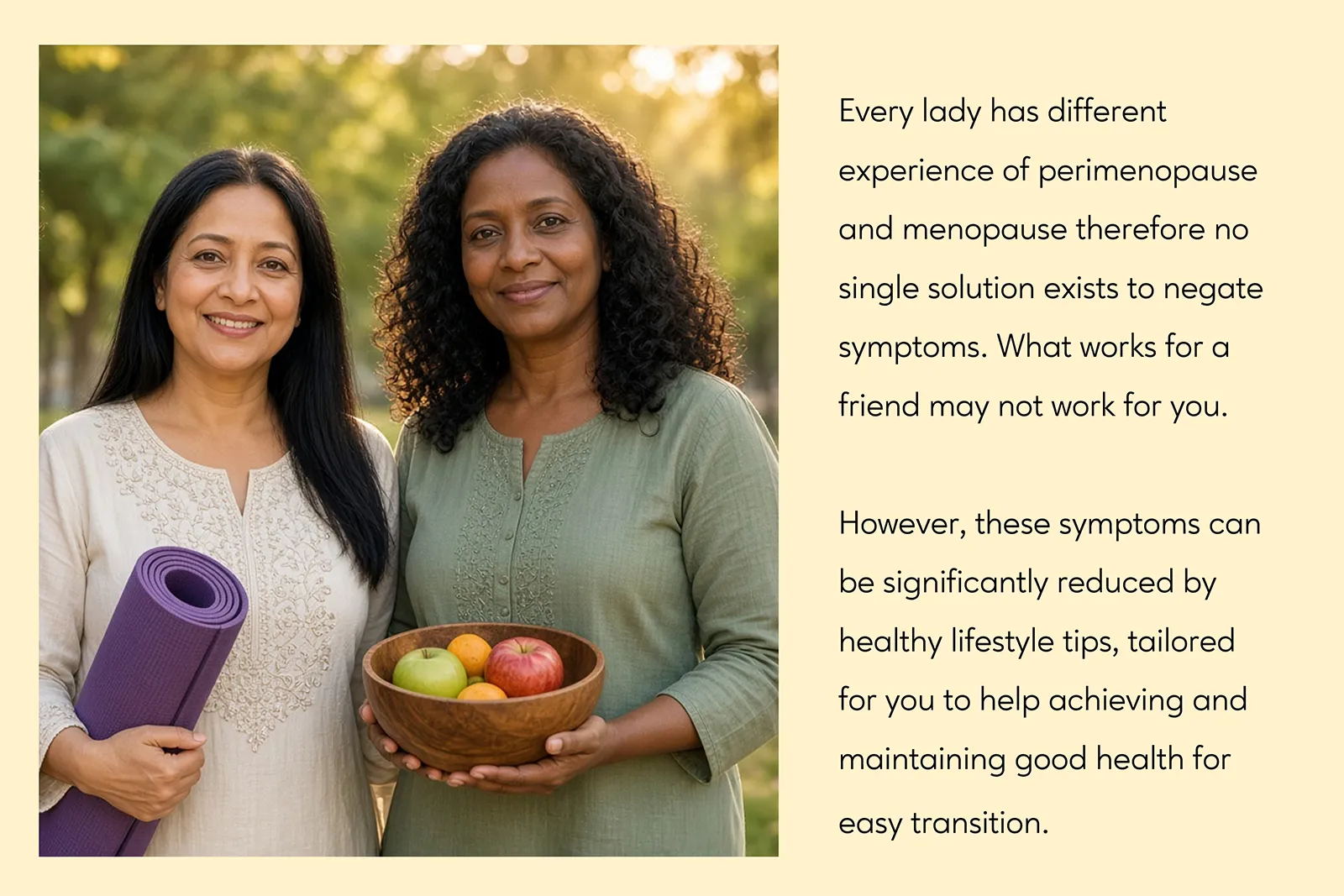
Conventional treatment with hormonal pills often leads to further problems. As Ayurveda doctors, we assess your health, lifestyle and diet, identify the imbalances, and recommend diet and herbs to resolve them — supporting sustainable weight and hormonal balance and restoring your hormonal health naturally.
We work alongside your treating physician — and will never ask you to stop a prescribed medicine on our advice alone. Herbs are medicine, not daily food; what suits one person may not suit another.