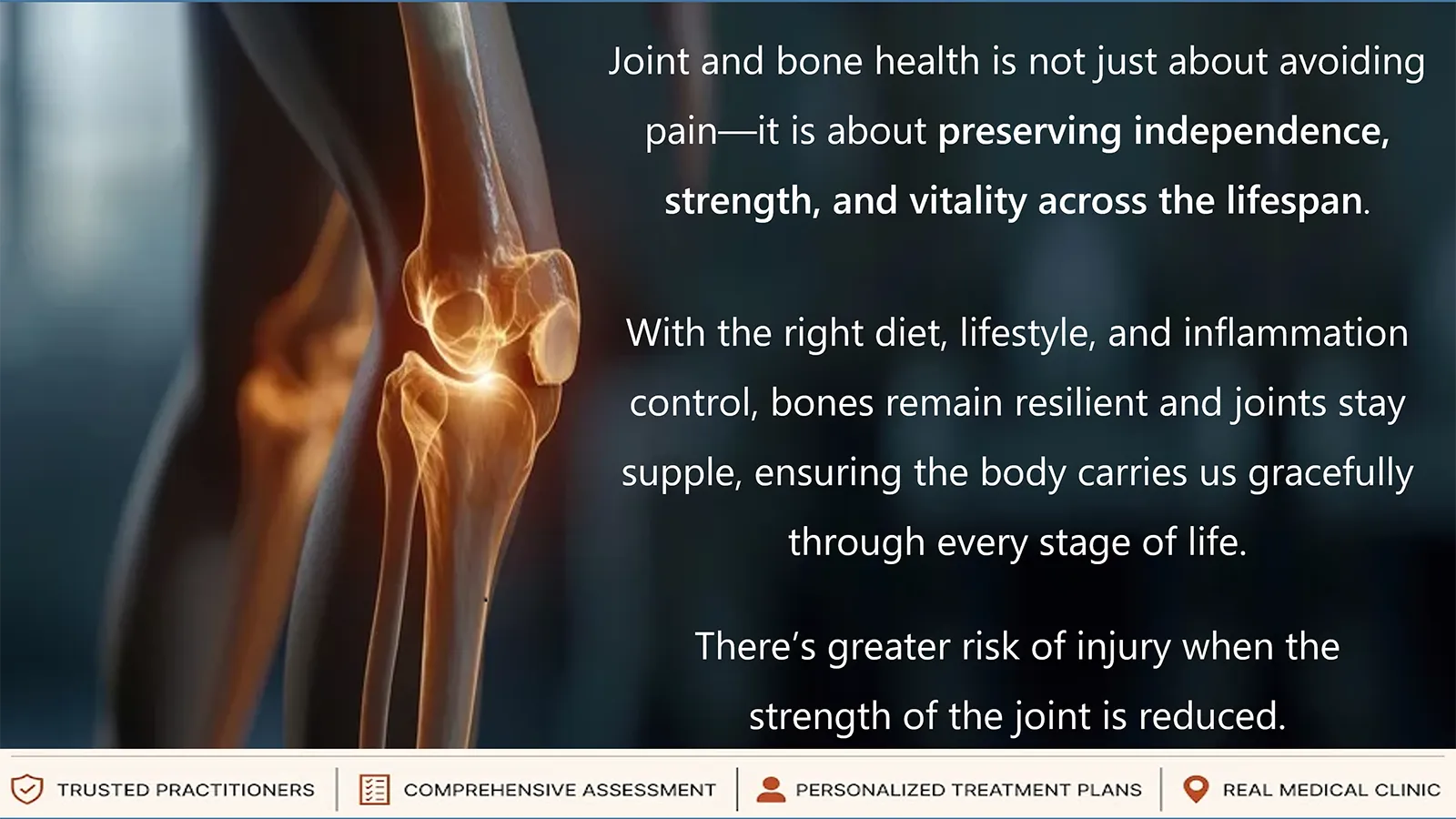
Why joint and bone health matters now
We were built to move, but modern life keeps us still. Long hours seated, little weight-bearing exercise, minimal sun (and so widespread vitamin D deficiency), calcium-poor processed diets and rising obesity are all weakening bones and overloading joints — which is why osteoarthritis, back pain and osteoporosis are appearing decades earlier than they once did.
The stakes are high, because mobility is independence. Joint pain and stiffness make it hard to move, exercise, travel or simply enjoy daily life, and people who hurt often slip into inactivity — which then worsens weight, blood sugar, mood, heart and bone health in a vicious circle. Keeping joints and bones strong is therefore not a concern only for the old; it is the foundation of an active, dignified life at every age.
How we are damaging our bones
Bone is living tissue, constantly broken down and rebuilt — and our habits are tipping that balance toward loss. A sedentary lifestyle removes the weight-bearing stress that tells bones to stay strong, while diets high in sugar, salt, soft drinks and processed food, and low in calcium, protein and vitamin D, starve them of what they need. Smoking, excess alcohol, chronic stress and long courses of certain medications (such as steroids) accelerate the decline.
The result is bones that thin silently (osteopenia, then osteoporosis) and joints whose protective cartilage wears faster than it can repair. Excess body weight multiplies the load on knees, hips and spine, and chronic low-grade inflammation — the same driver behind so much modern disease — quietly eats away at joint tissue from within.
The degenerative and inflammatory joint diseases
Several conditions damage joints and bones, often overlapping. Osteoporosis silently thins the bones until they fracture easily. Gout arises from uric-acid crystals — frequently in the big toe — and pseudogout from calcium crystals in larger joints. Psoriatic arthritis affects around a third of people with psoriasis, and viral arthritis can follow infections such as dengue or chikungunya.
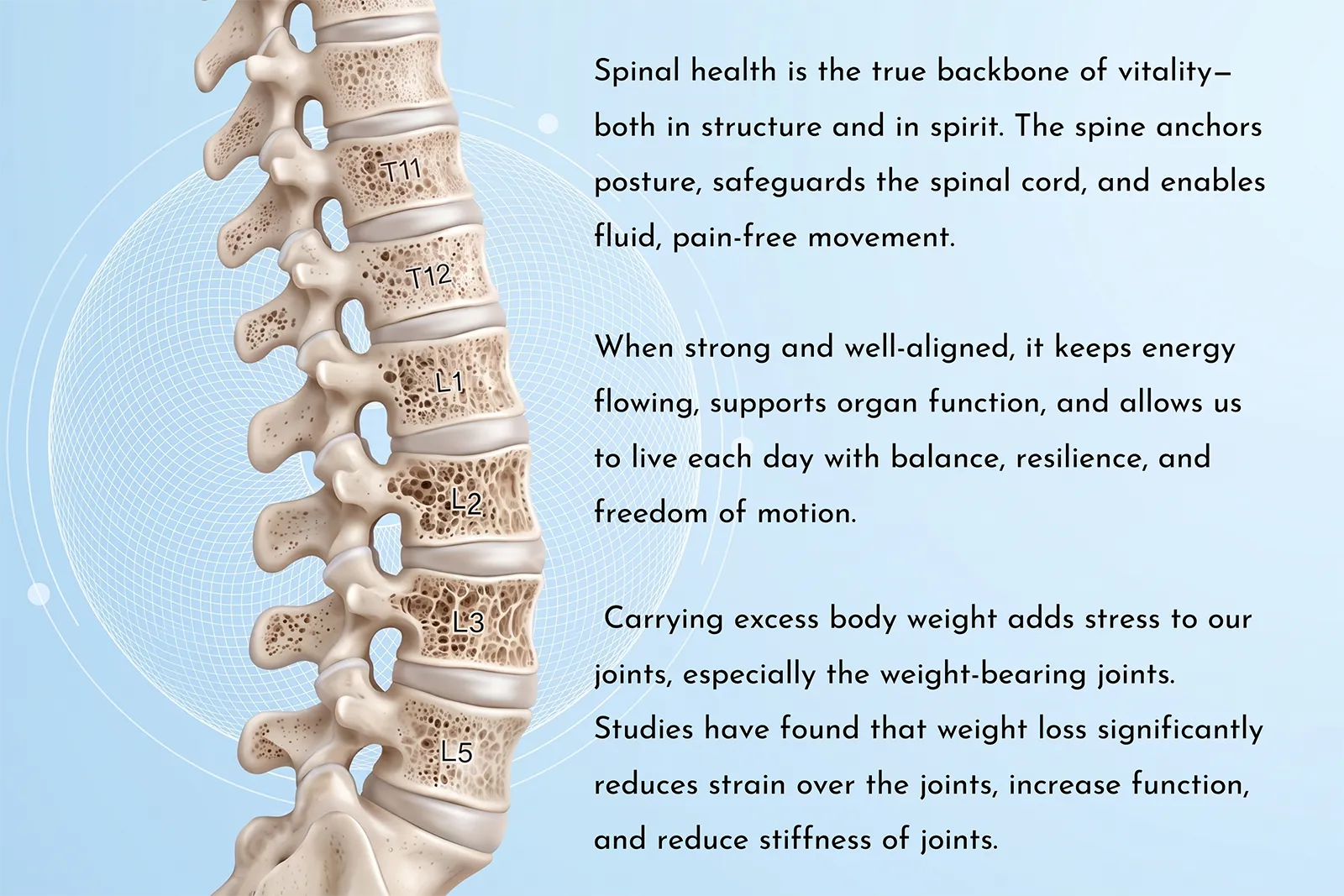
Cervical and lumbar spondylosis — degeneration of the spine — and chronic back and neck pain are now extremely common, driven by posture and screens. But two conditions dominate the picture, and deserve a closer look: osteoarthritis and rheumatoid arthritis.
Osteoarthritis (OA) — the wear-and-tear disease
Osteoarthritis is the most common joint disease — a degenerative "wear-and-tear" condition in which the cartilage cushioning the ends of the bones gradually wears away. As the joint space narrows, bone rubs against bone, and the joint becomes painful, stiff and swollen, most often in the knees, hips, spine and hands.
It builds over years and is strongly driven by factors we can change: excess weight (each extra kilo multiplies the load through the knees), inactivity and weak supporting muscles, injury, and chronic inflammation. This is precisely why the right diet, weight management, movement and inflammation control can slow OA dramatically, ease pain, and often postpone or avoid joint-replacement surgery.
Rheumatoid arthritis (RA) — when immunity attacks the joint
Rheumatoid arthritis is very different: an autoimmune disease in which the immune system attacks the joint lining, causing inflammation, pain, swelling and, over time, joint deformity. It typically strikes the small joints of the hands, wrists and feet symmetrically, often with morning stiffness and fatigue, and can also affect the heart, lungs and eyes.
Because RA is driven by systemic inflammation and an overactive immune response, it responds powerfully to an anti-inflammatory, gut-supporting diet and lifestyle alongside medical care — calming flare-ups, reducing stiffness and pain, and helping protect the joints from long-term damage.
Joint disease in Ayurveda
Ayurveda describes joint disease chiefly as Sandhigata Vata (degenerative, as in OA), Aamavata (inflammatory, closely mirroring RA) and Vata Rakta (as in gout), with many further conditions named by the tissue affected, the dosha involved and where symptoms appear.
Two mechanisms are recognised. First, poor digestion forms Ama — a toxic, sticky substance — which lodges in the joint tissues and causes inflammation, swelling and deterioration; this is the essence of the inflammatory arthritides. Second, aggravated Vata disturbs the nourishment of the tissues, leading to the drying, degeneration and wearing-away of the joint and its supporting structures — the essence of degenerative disease.
Why calcium pills and dairy alone don't work
Most people, faced with weak bones, simply reach for calcium tablets, extra milk and vitamin D capsules — and are puzzled when nothing improves. The reason is that bone is not built by calcium alone. Calcium must first be absorbed from the gut, then actually directed into bone, and both steps depend on far more than a supplement: adequate vitamin D and vitamin K2, magnesium, protein, healthy hormones and, above all, weight-bearing movement that signals the bone to lay down new tissue.
Without those, swallowed calcium is poorly absorbed and can even settle in the wrong places — the arteries and kidneys — rather than the skeleton. A poor gut absorbs little of it; a sedentary body has no reason to deposit it; and excess dairy or mega-doses of a single nutrient can upset the balance rather than restore it. This is exactly why a scattergun of pills fails, and why real bone and joint health comes from a properly balanced diet, correcting the whole nutritional and hormonal picture, and moving the body — not from a supplement bottle.
How Ayurveda, diet and herbs help
Because prolonged painkillers can harm the liver and gut and steroids damage health over time, our aim is to treat the joint at the level of cause rather than simply mask pain. We combine an anti-inflammatory, Ama-clearing diet — rich in the right nutrients, calcium, protein and vitamin D, and free of the foods that inflame — with weight management, gentle strengthening movement and lifestyle correction that rebuilds bone and protects cartilage.
Alongside this, time-honoured herbs help calm inflammation, ease pain and stiffness, nourish the joint tissues and pacify aggravated Vata — supporting both the wear-and-tear of OA and the immune-driven inflammation of RA. Used skilfully, this approach can reduce pain and flare-ups, slow degeneration, improve mobility and, in many cases, help patients avoid or postpone surgery — always working alongside your treating doctor, never in place of prescribed treatment.
We help you identify what changes and support you need — a thorough assessment of your health status, lifestyle modification, the best dietary options and supportive herbs to calm inflammation, strengthen bone, protect the joints and improve mobility. We work alongside your treating doctors and will never ask you to stop a prescribed medicine on our advice alone. To maintain health and fight disease, the body needs the right nutrients, at the right time, in the right ratio.
We work alongside your treating physician — and will never ask you to stop a prescribed medicine on our advice alone. Herbs are medicine, not daily food; what suits one person may not suit another.