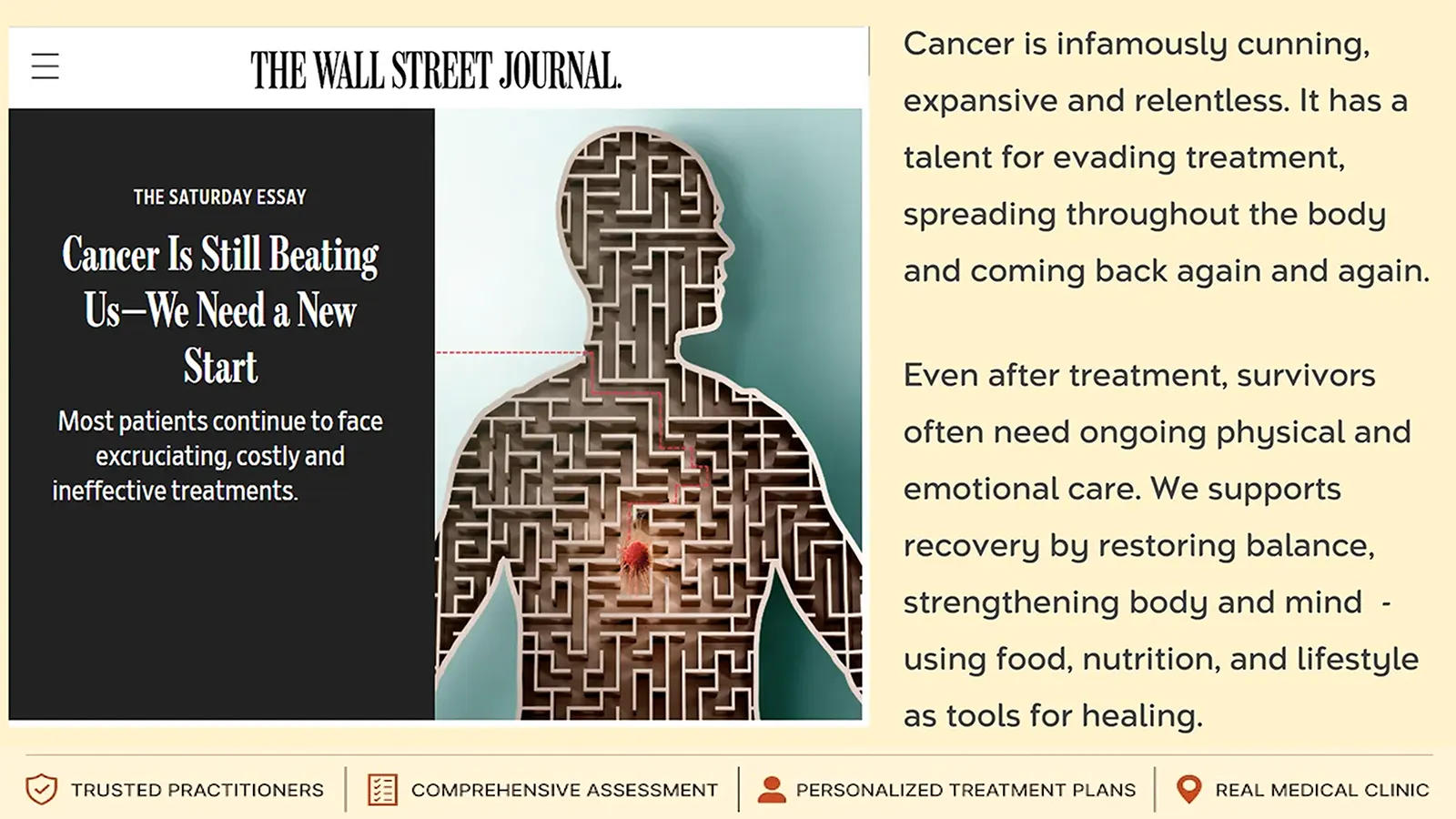
What cancer is
In simple terms, cancer is an abnormal growth of the body's cells. Normally, cells die when they become old or damaged and are replaced; cancer develops when this control mechanism fails. The body usually eliminates cells with damaged DNA before they turn cancerous, but that ability declines as we age — part of why cancer risk rises later in life.
Excess abnormal cells can divide uncontrollably to form a tumour. Cancer cells can "hide" from the immune system, build their own blood supply, influence the healthy tissue around them, and — if they reach the blood or lymph — travel to form new tumours elsewhere, a process called metastasis.
You are not alone in this
A diagnosis lands not on one person but on a whole family, and it is natural to feel frightened, angry or overwhelmed. Those feelings are not weakness — they are part of being human in an unimaginably hard moment, and they deserve to be met with patience and compassion, not brushed aside.
Even after treatment ends, the journey often continues. Survivors frequently need ongoing care for the lingering effects of the illness and its treatment, and for the emotional weight it leaves behind. We hold space for all of it, so that healing can be of the whole person, not only the body.
The side effects of treatment
Chemotherapy and radiation destroy cancer cells, but in the process they damage healthy cells too. Neutropenia — low neutrophils — raises infection risk and may pause treatment until counts recover. Fatigue is the most common effect, as the body fights cancer and repairs treatment damage at once.
Hair loss (usually regrowing in 2–4 months), skin irritation and sun sensitivity, nausea, vomiting and diarrhoea, loss of appetite and taste changes, mouth sores, and trouble concentrating or remembering are all common. Knowing what to expect makes them a little easier to bear — and much of the discomfort can be gently eased.
Ayurvedic supportive care
In Ayurveda, cancer is a tridoshic disorder: Vata drives metastasis, Kapha the abnormal growth of the tumour, and the tejas of Pitta the heightened metabolism of the cancerous cells, whose tissue has a strong agni. Its causes include repeated exposure to environmental, Pitta-provoking toxins at the cellular level.
After chemotherapy or radiation, both sharirik bala (physical strength) and satva bala (mental strength) are low, and the body feels devitalised — when they are low, recovery is not easy. Because all systems are interconnected, weakness in one contributes to weakness in others, often leaving a chronic state of low-grade inflammation.
Rebuilding strength and hope
An Ayurvedic approach to supportive care focuses on restoring equilibrium, rebuilding mental and physical strength, and gentle rejuvenation. Herbs, food and lifestyle are the three levers of health you can control — the right diet, routine and herbs help rebuild vitality and steady the spirit through a difficult time.
Patients undergoing radio- or chemotherapy commonly experience fewer side effects with supportive herbal remedies and dietary guidance, and recover better afterwards. Small daily improvements — a little more appetite, steadier sleep, returning energy — add up to a real difference in how you feel, and in the hope you carry forward.
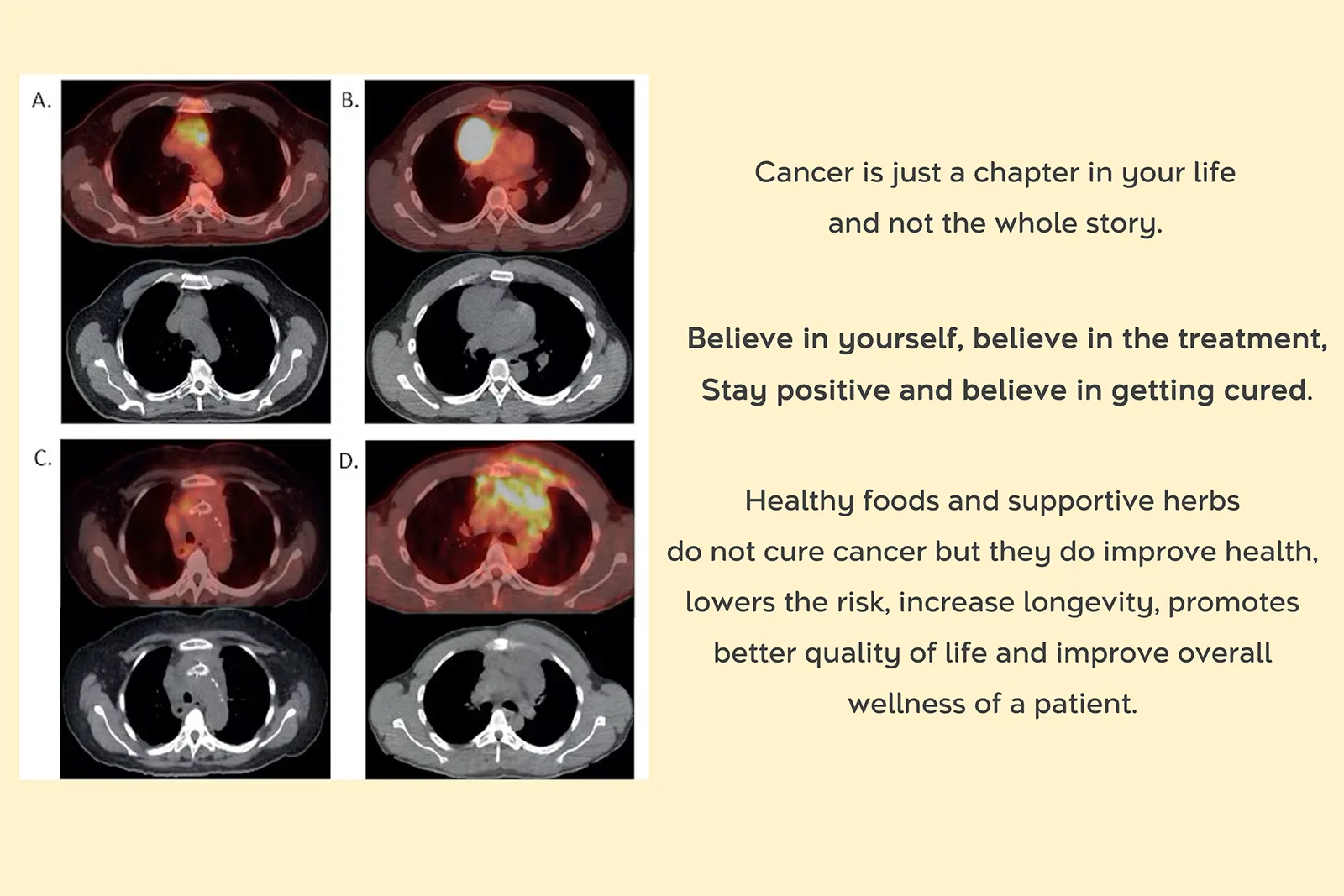
We help you identify what your body needs — a thorough assessment of your health status, the best dietary options, and supportive herbs to manage the side effects of treatment and help you recover faster. We do not offer alternative cancer cures; your medical team leads the cancer care, and we support you and your family gently, honestly and compassionately through it.
We work alongside your treating physician — and will never ask you to stop a prescribed medicine on our advice alone. Herbs are medicine, not daily food; what suits one person may not suit another.