The problems most often seen now
Certain conditions cluster in these two decades, and recognising them early makes all the difference. PCOS is the most common, bringing irregular or absent periods, acne, weight gain, unwanted hair and difficulty conceiving. Thyroid disorders — usually hypothyroidism — are close behind, causing fatigue, weight change, hair fall and low mood.
Others appear steadily: endometriosis and fibroids, causing painful or heavy periods; premenstrual syndrome (PMS) and its more severe form PMDD; recurrent acne and hair loss driven by hormones; and, increasingly, stress- and lifestyle-related irregular cycles, low libido and unexplained fatigue. Many women also discover imbalance only when trying to conceive.
Why managing it matters
Left unaddressed, these conditions rarely stay still. Untreated PCOS and thyroid imbalance are linked to insulin resistance, weight gain, infertility, and a higher long-term risk of diabetes and heart disease; endometriosis and fibroids can progress and affect fertility. What begins as an inconvenient, irregular cycle can quietly compound into something far harder to reverse.
The 20s and 30s are also the body's peak years for building the reserves — bone density, metabolic health, egg quality — that carry you through your 40s, 50s and beyond. Correcting imbalance now protects not just this decade but every one that follows.
Why hormones drift now
Hormonal imbalances can be transient or long-term, and the symptoms vary with the hormones involved — but they share one thing: they harm quality of life. Thyroid disorders and PCOS can affect hormone production, and so can lifestyle: poor diet, smoking, alcohol, too little activity and chronic stress.
Some medications, including birth-control pills, steroids and certain antidepressants, can also be associated with imbalance in individual cases. Hormonal pills prescribed for heavy periods, acne or mood can suppress symptoms while masking underlying PCOS or endometriosis that affects long-term health and fertility.
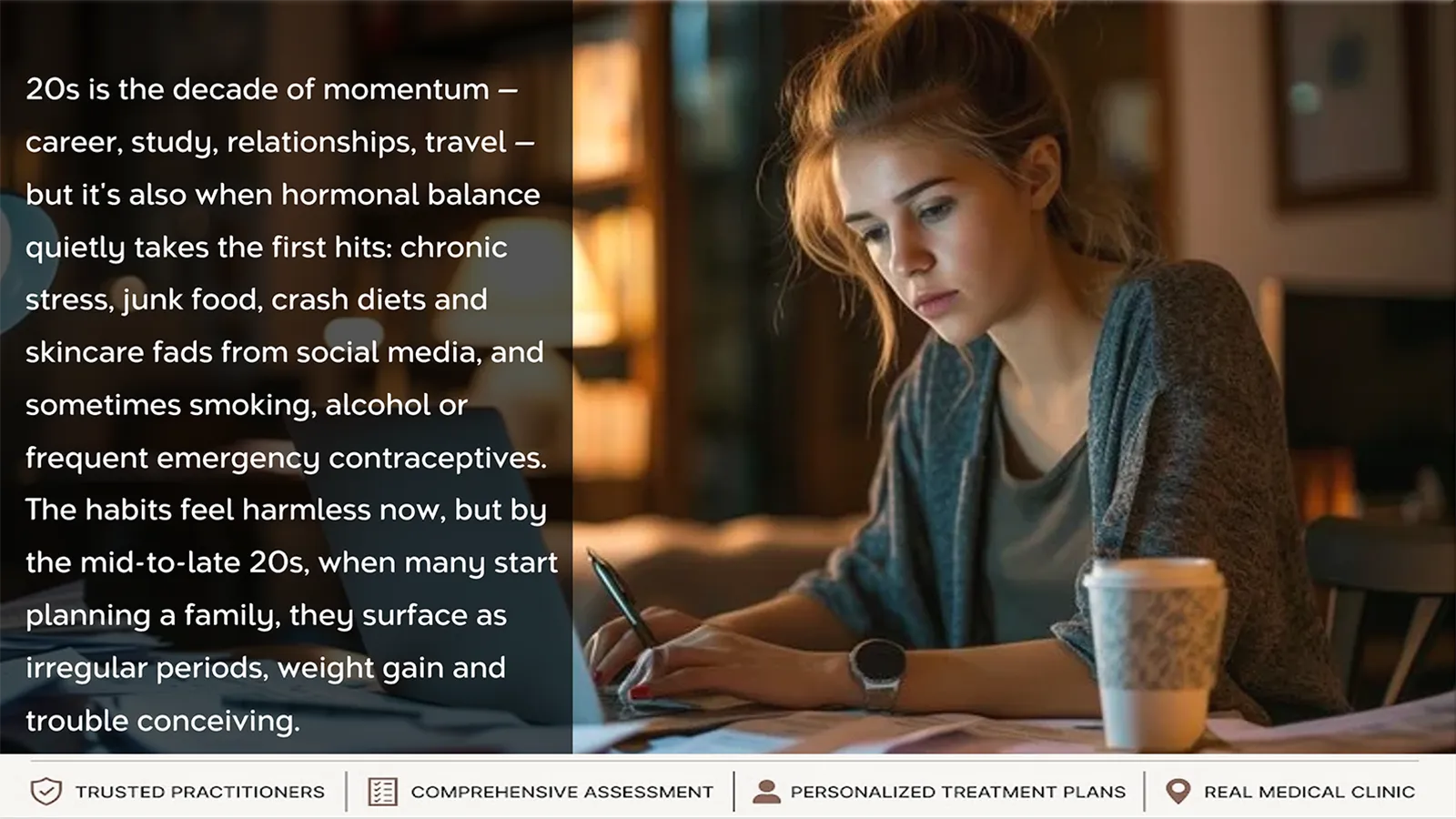
The 20s
The early 20s are full of energy and possibility — career, relationships, study, travel — but hormonal balance is increasingly compromised by extreme stress, anxiety and exposure to harmful chemicals, including in cosmetics, and by unscientific weight-loss and skincare advice on social media.
More junk food, and sometimes smoking, alcohol and frequent use of emergency contraceptive pills, disrupt the cycle. By the mid-to-late 20s, as many plan a family, past habits show up as irregular periods, weight gain and infertility.
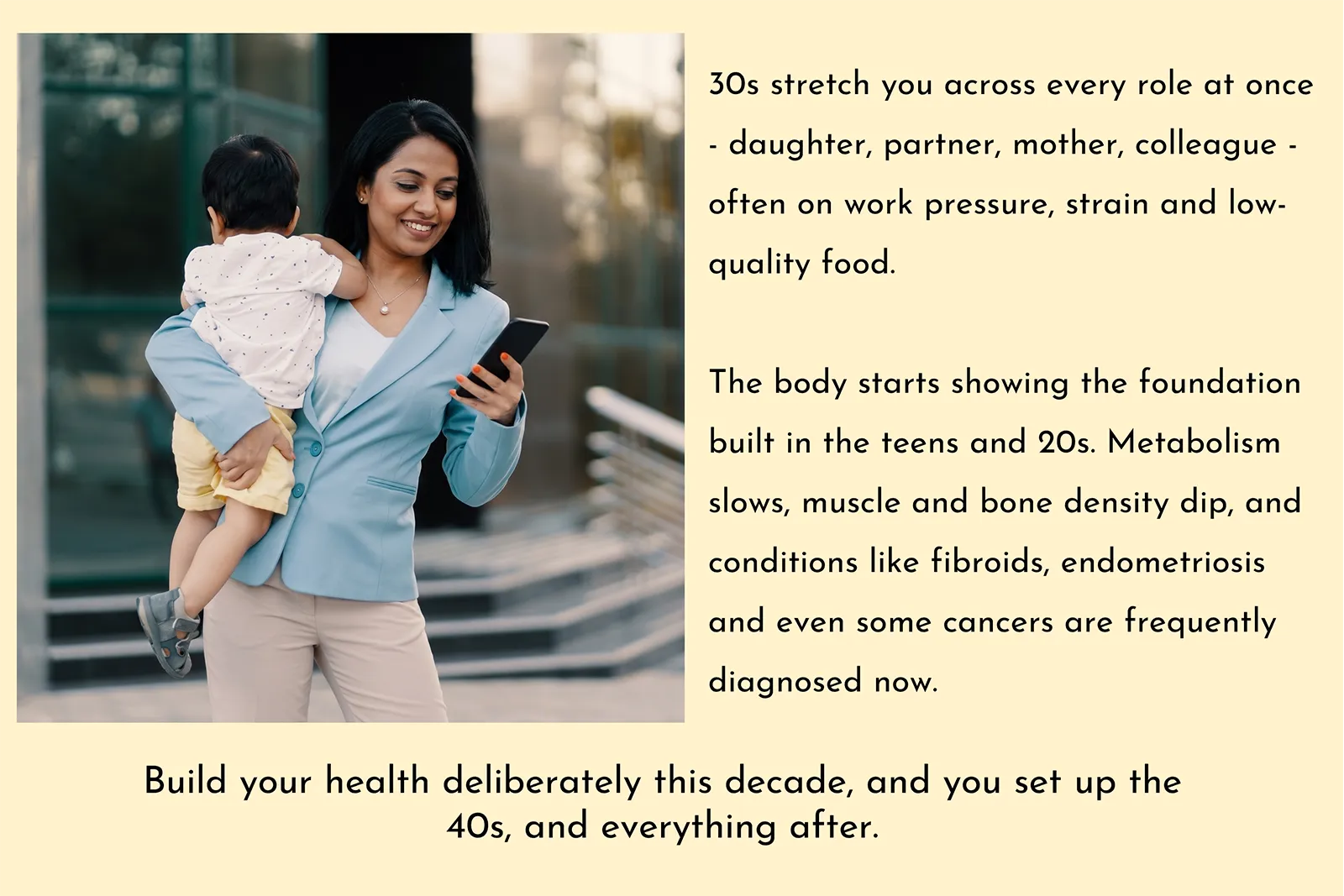
The 30s
The 30s mean juggling roles as daughter, friend, colleague, wife and mother, amid work pressure, relationship strain and low-quality food. The early 30s can be one of the easiest times to conceive, though not always ideal for other reasons. The body begins to show ageing — fine lines, aches, less muscle tone and bone density, slower metabolism.
This is when women bank on the foundation built in their teens and 20s; if that was poor, outcomes now can be too. Fibroids, endometriosis and some cancers are frequently diagnosed in the 30s and 40s. Using the 30s to solidify foundational health sets up the 40s, 50s and beyond.
How we help — balancing hormones with food and herbs
Nutrients act as co-factors, precursors and regulators in making and using hormones, and by the late 20s, chronic inflammation and oxidative stress from poor diet begin to disrupt reproductive function — affecting ovulation and egg quality. So the quantity, quality and composition of food strongly influence hormonal health.
As Ayurveda doctors, we begin with a thorough assessment of your health, lifestyle and diet to find the real imbalance behind the symptoms — then build a personalised plan of nutrient-rich diet and, where genuinely needed, gentle herbs. This steadies blood sugar, calms inflammation, restores regular cycles and safeguards fertility, resolving the root cause rather than masking it with hormonal pills that can create further problems in the years that follow.
Conventional treatment with hormonal pills can create further problems in the years that follow. As Ayurveda doctors, we assess your health, lifestyle and diet, identify the imbalances, and recommend diet and herbs to resolve them — restoring hormonal health naturally, and building the foundation for a healthy 40s and beyond.
We work alongside your treating physician — and will never ask you to stop a prescribed medicine on our advice alone. Herbs are medicine, not daily food; what suits one person may not suit another.