
Managing what won't resolve
Age brings chronic conditions that don't resolve but need steady management: diabetes, blood pressure, thyroid imbalance, joint pain, and digestive or sleep concerns. Our focus is to manage these gently and consistently, improving day-to-day wellbeing rather than treating numbers alone.
Ayurveda alongside modern diagnostics
We combine classical Ayurvedic support with modern clinical diagnostics. Regular monitoring of blood work and vitals guides treatment, while time-tested Ayurvedic formulations and lifestyle adjustments work alongside conventional markers — a considered approach suited to an ageing body.
Clarity for families
For families, this also means clarity. You'll understand your parent's condition, the care being provided, and what to watch for — so you can stay involved even when work keeps you occupied. Because they cared for us; now it is our turn to care for them, with knowledge, patience and compassion.
What ageing brings
Ageing brings the common, costly and preventable problems all adults face — heart disease, kidney disease, stroke, cancer, type 2 diabetes, obesity and arthritis. Ageing with poor health carries a high cost to individuals and families, and those costs are rising with the price of diagnosis and treatment.
A change in vision is often the first undeniable sign. The process tends to begin around 40–45, then declines gradually but continuously — often worsened by the loss of a spouse, children busy with their own lives, loneliness, low mood, and habits like inactivity, poor diet, tobacco and alcohol.
How the body changes
As we age, the cells and organs age too, and most organs function less well. Muscle mass is gradually lost, bones become less dense as the body absorbs less calcium, and cartilage loss from lifelong use leads to osteoarthritis while ligaments and tendons stiffen — so joints feel stiff and osteoporosis weakens the bones.
The heart and arteries stiffen, so blood pressure tends to rise, and the immune system slows, making cancer more common. Body fat redistributes, changing the shape of the torso, and the body becomes less flexible overall.
For your mother — through and beyond menopause
Women generally live longer than men, yet often have worse health at the end, spending roughly twice as many years disabled before death. The effects of ageing on sex hormones are more obvious in women, and while the decline is gradual for both, for women abrupt change begins after menopause.
Falling hormone levels shrink the ovaries and uterus and bring hot flashes, night sweats, thinner and drier vaginal tissue, and changes to the breasts. Ageing women may also experience weight gain, difficulty sleeping, irritability, trouble concentrating, low mood and the wider symptoms of menopause.
For your father — ageing male syndrome
Men generally have shorter life expectancies and poorer health as they age, and their chronic conditions carry a heavy physical, emotional and financial cost. Yet a great deal can be controlled.
Ageing men may experience ageing male syndrome, caused by a decline in testosterone. It can show up as weight gain, difficulty sleeping, irritability, erectile dysfunction, trouble concentrating, increased urination, low mood, and loss of bone, muscle and hair — many of them made worse by inactivity, poor nutrition, tobacco and alcohol. Recognised early and supported well, much of this can be eased rather than simply endured.
More than physical
As parents age, issues beyond health can set in too — isolation, social and financial insecurity, declining authority, loneliness and a feeling of neglect. These weigh as heavily as any physical complaint, and they shape how well a person copes with the physical changes alongside them.
This is often where families feel most helpless. Part of our role is simply to listen, to reassure, and to give the whole family a plan they can follow together.
The way to healthy ageing
The good news is that much is within your parents' control. Better health and quality of life come from maintaining physical, mental and social well-being — adopting healthy habits and making the lifestyle changes that reduce the risk of age-related disease.
A diet that addresses the specific requirements of ageing, together with herbs to manage any underlying conditions, does a great deal to keep them well — and if a chronic issue is already present, to keep it from worsening with age.
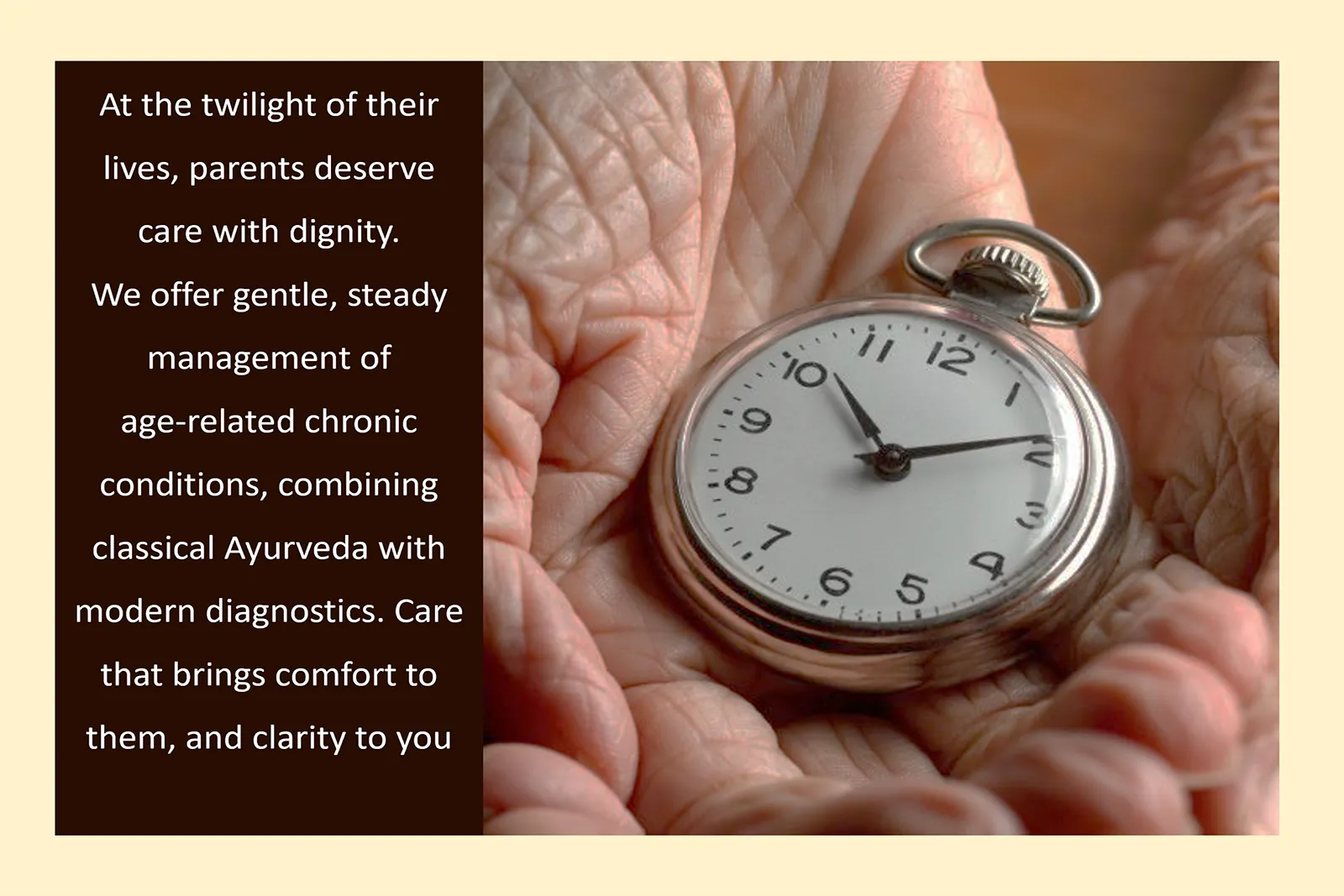
We help identify the changes and support your parents need — a thorough assessment, the best dietary options for the requirements of ageing, and supportive herbs to help them get their balance back. If a chronic issue is already present, we help mitigate it before it worsens with age. Throughout, we keep you, the family, informed and involved.
We work alongside your treating physician — and will never ask you to stop a prescribed medicine on our advice alone. Herbs are medicine, not daily food; what suits one person may not suit another.