Why it matters now more than ever
We were never built for the way we now live. Long sedentary hours, meals eaten at odd times, ultra-processed food heavy in sugar and refined oil, broken sleep and unrelenting stress all conspire to overwhelm the body's delicate sugar-handling machinery — which is why diabetes is striking Indians a full decade earlier than in previous generations, often in the prime of working life.
The pancreas and our metabolism can only absorb so much strain before they falter. Understanding this is empowering rather than frightening: the same daily choices that push blood sugar onto the burner are the ones we can change to bring it back down.
What happens in diabetes
Glucose — blood sugar — is your body's main fuel, absorbed after a meal and carried through the blood to your cells. Insulin, released by the pancreas, is the key that unlocks your cells so that sugar can enter and be used for energy.
In diabetes, insulin can't do its job: glucose can't get into the cells and builds up in the blood, damaging cells as it circulates. This may be from too little insulin, from the body not responding to the insulin it makes, or a combination of both.
Pre-diabetes and insulin resistance
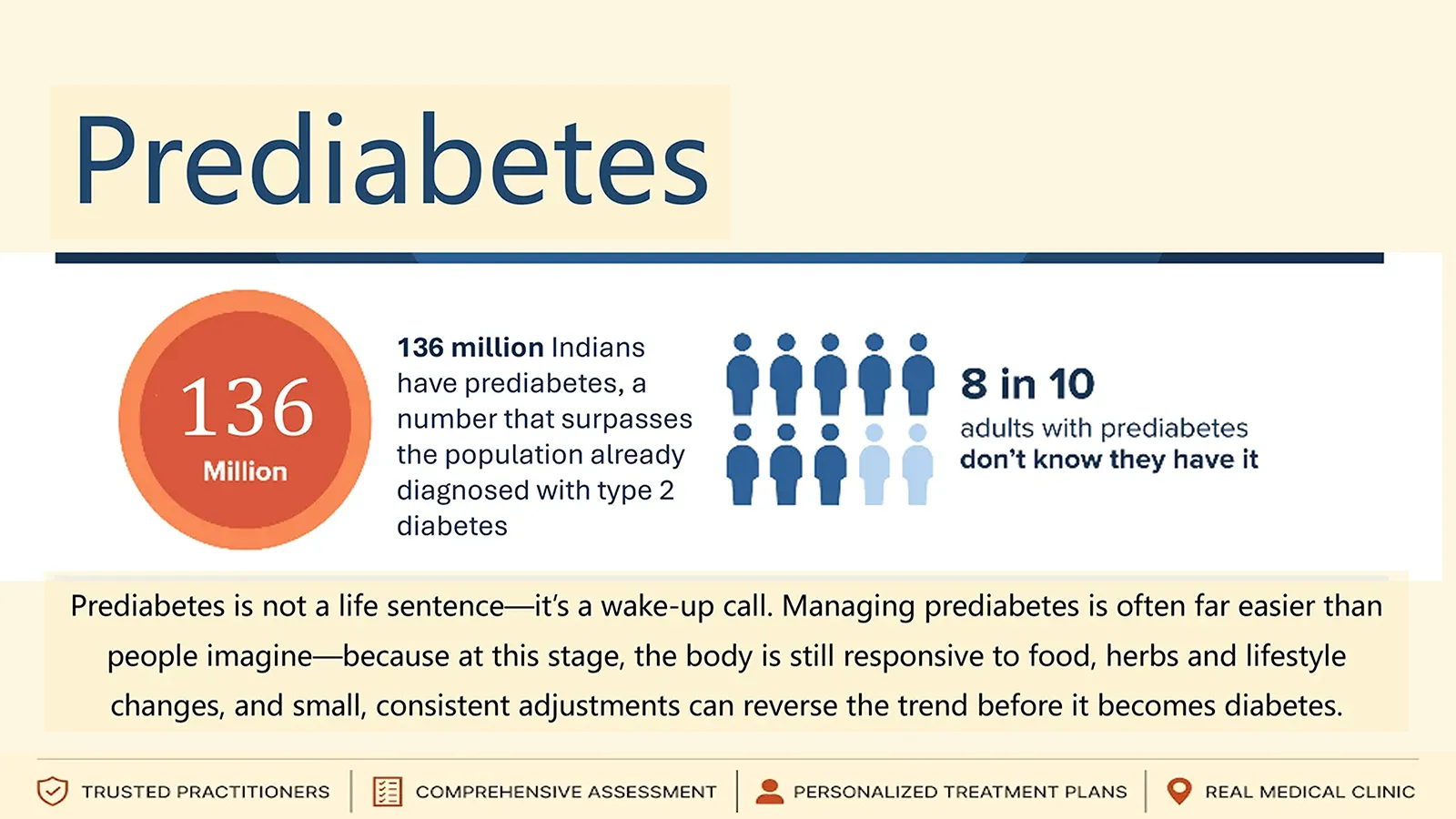
Type 2 diabetes doesn't happen overnight. It usually begins as small errors in sugar metabolism — pre-diabetes, where fasting sugar sits between 100 and 125 mg/dl, often with no symptoms at all. It is a warning sign, and with the right corrections it can frequently be reversed.
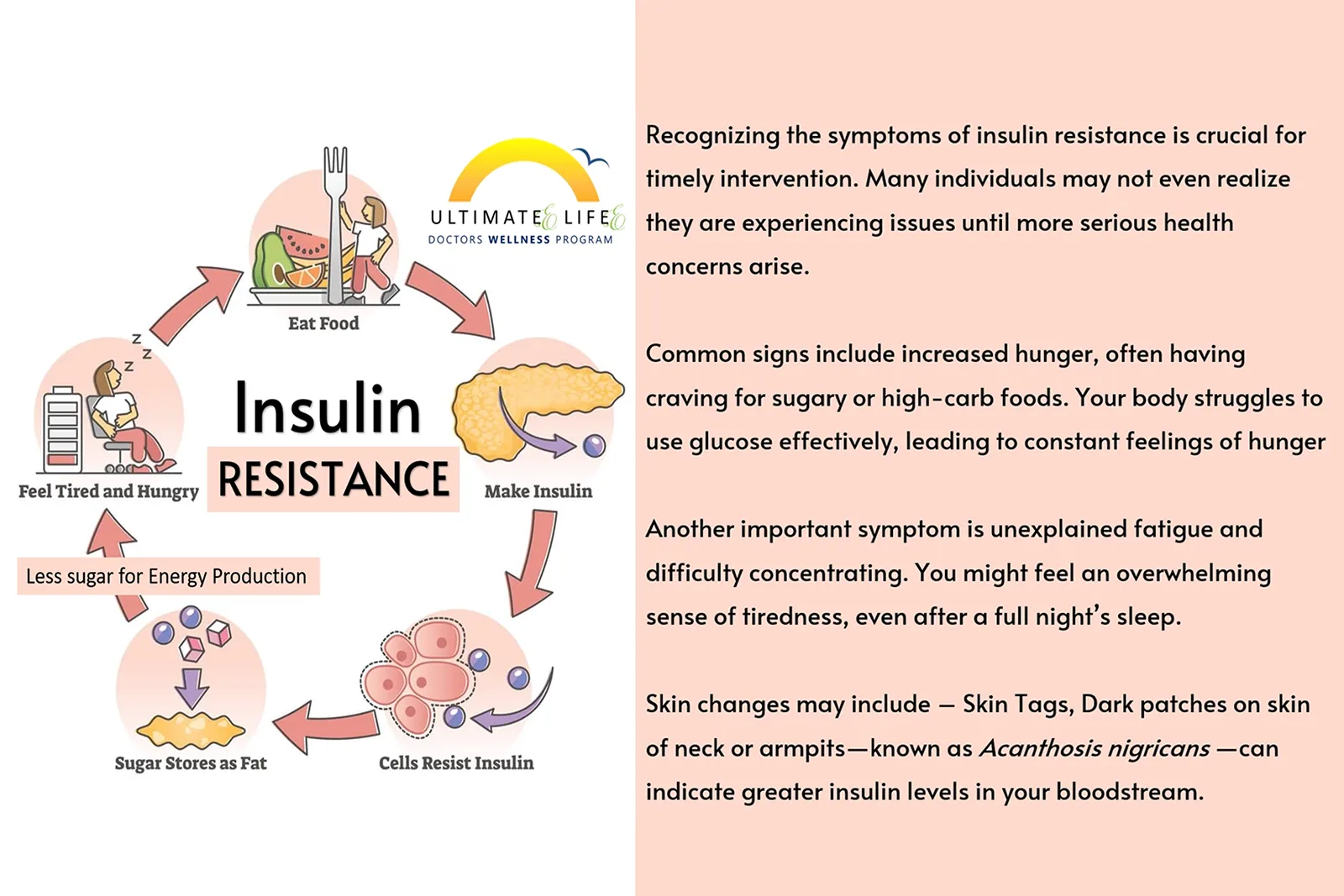
Insulin resistance is the earlier state: cells stop responding, the pancreas makes ever more insulin, and both insulin and sugar climb. Over time the pancreas tires and sugar levels rise sharply. Left unmanaged, insulin resistance is linked to fatty liver, PCOS, heart disease and metabolic syndrome.
The damage runs deeper — heart and kidneys
Diabetes is never only about sugar. Persistently high glucose silently injures the fine blood vessels throughout the body, which is why diabetes is now a leading driver of coronary artery disease (CAD) and chronic kidney disease (CKD) — both rising sharply across India. It roughly doubles the risk of heart attack and stroke, and is among the commonest causes of kidney failure.
Because the same vessels feed the heart, kidneys, eyes and nerves, uncontrolled sugar quietly threatens them all at once. This is exactly why managing diabetes early, and at the level of cause, protects far more than a number on a report — it protects the organs your future depends on.
The vicious circle of inflammation
High blood sugar and insulin resistance don't just cause damage — they feed chronic, low-grade inflammation throughout the body. That inflammation, in turn, makes cells even more resistant to insulin, so sugar climbs higher still: a self-reinforcing loop that gradually deranges metabolism, accelerates ageing of the organs and paves the way for heart, kidney and neurological disease.
Breaking this circle is central to real diabetes care. Cool the inflammation and restore insulin sensitivity, and the body can begin to heal rather than steadily decline — which is why our focus reaches well beyond simply lowering today's reading.
Diabetes in Ayurveda
Ayurveda describes diabetes within a group of conditions called Prameha, with a multi-factorial cause rooted in imbalance of the Kapha and Vata doshas. Untreated, Prameha can culminate in Madhumeha — chronic diabetes with progressive decline in organ function.
Today's fast pace — mental strain, work pressure, little exercise, untimely eating, too much screen time and too little rest — are the modifiable lifestyle factors driving diabetes, hastening it further where there is a hereditary tendency.
Food and herbs — where healing begins
Nothing influences blood sugar as directly, or as daily, as what sits on your plate. A diet built on whole grains, pulses, plenty of vegetables, good fats and gentle, warming spices — while cutting refined sugar, white flour and ultra-processed food — steadies glucose, calms inflammation and gradually restores the body's own insulin sensitivity. Eaten in the right combinations, at the right times and in the right measure, food becomes the most powerful medicine you take.
Alongside it, Ayurveda offers time-honoured herbs that support sugar metabolism, protect the pancreas and organs, and ease the inflammation that drives the disease — but herbs are medicine, not daily food, and social-media tips are no substitute for a doctor. Matched carefully to your constitution and health status, diet and herbs together do what a single pill aimed at one number never can: address the cause.
Why your treatment should be individual
Every person differs in genetic makeup, food habits and environment, and many factors shape how disease develops — so treatment has to be individualised. Social-media herb tips can never replace a doctor; the herbs suggested there may not suit your health status, and herbs are medicine, not daily food.
After a thorough assessment we design a plan combining Ayurvedic therapies, herbs, diet and lifestyle change — working together to correct the imbalances, improve organ function and enhance your health outcomes.
We combine classical Ayurveda with modern diagnostics to find the underlying causes, then engage you as an active participant in your own healing — correcting diet, calming inflammation and balancing your doshas so the body can return to health.
We work alongside your treating physician — and will never ask you to stop a prescribed medicine on our advice alone. Herbs are medicine, not daily food; what suits one person may not suit another.