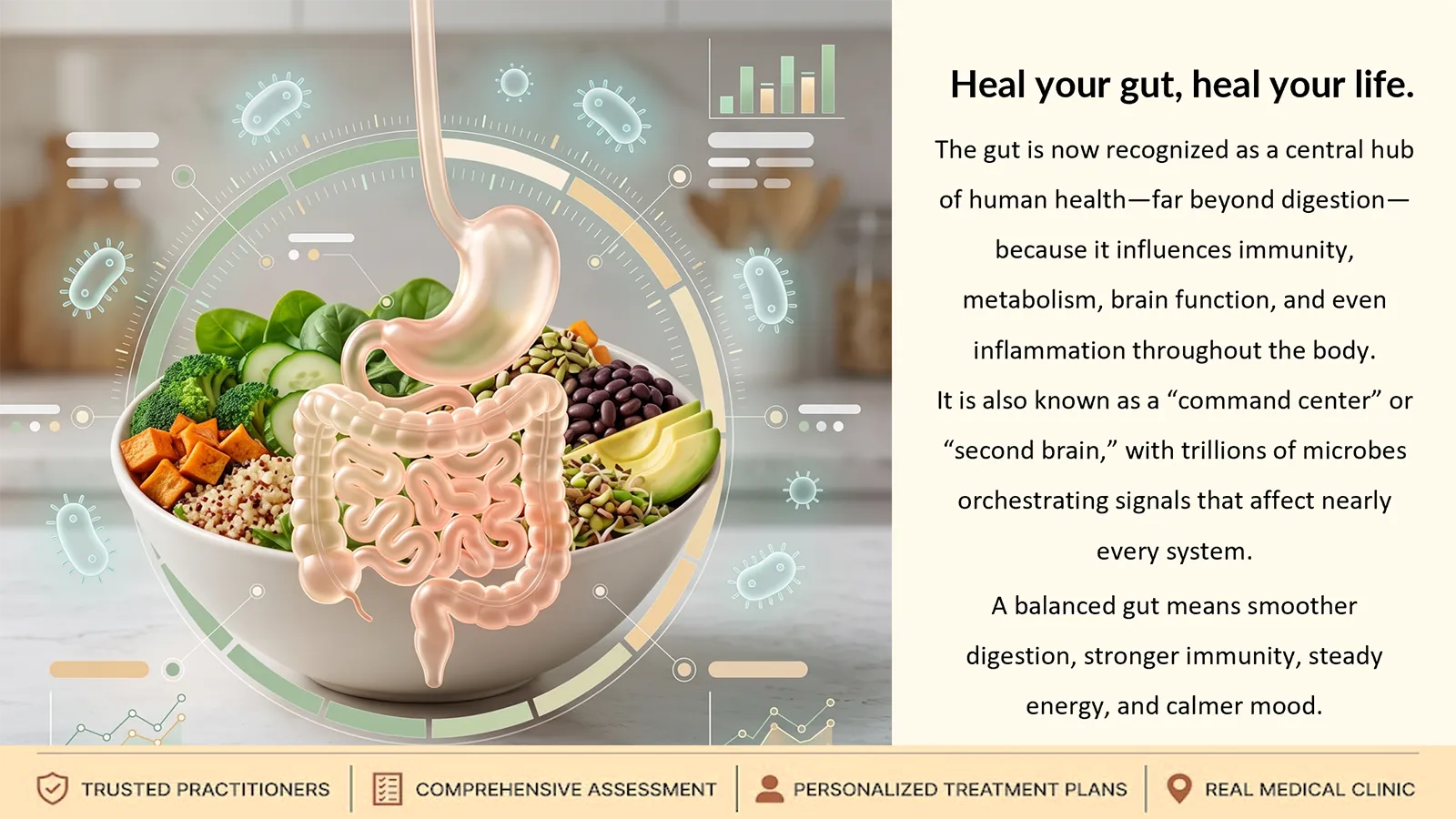
Why the gut is central to almost everything
The gut is far more than a digestive tube. Around 70% of the immune system lives in its wall, and a vast community of microbes — the microbiome — trains that immunity, manufactures vitamins, and produces short-chain fatty acids that calm inflammation throughout the body. A dense network of nerves, the "second brain," connects the gut directly to the mind, which is why most of the body's serotonin is made in the gut and why anxiety and mood so often track digestive health.
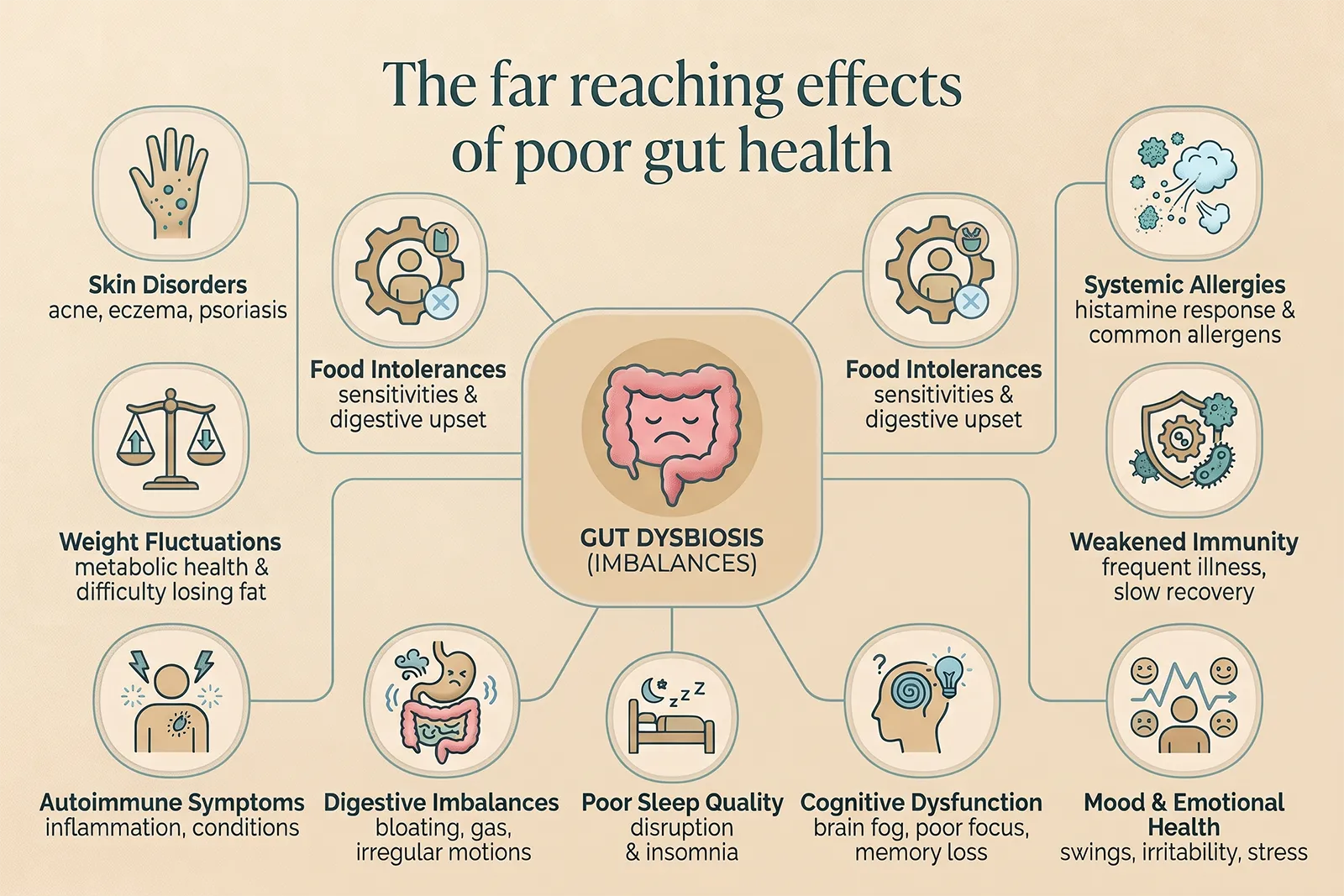
Because of these links, a disturbed gut can drive problems that seem unrelated to digestion: recurrent infections, allergies and autoimmunity, stubborn weight gain and insulin resistance, hormonal imbalance and PCOS, skin conditions like acne and eczema, poor sleep, brain fog and low mood. Heal the gut, and a surprising amount of the rest begins to settle.
Dysbiosis — when the inner ecosystem tips
A healthy gut holds a rich, balanced community of microbes. Dysbiosis is the loss of that balance — beneficial species dwindle, less helpful ones overgrow, and diversity falls. Modern life drives it relentlessly: ultra-processed food, sugar and refined oils, repeated courses of antibiotics, chronic stress, poor sleep, alcohol and a diet low in fibre all starve the good microbes and feed the wrong ones.
The cost is high. Dysbiosis fuels low-grade inflammation, disrupts how we extract and store energy, alters hormones and appetite signals, and weakens the gut lining itself — setting the stage for obesity, type 2 diabetes, fatty liver, autoimmune and inflammatory conditions, and mood disorders. Restoring microbial balance is therefore one of the most powerful levers we have over whole-body health.
Leaky gut — a barrier under strain
A healthy intestinal wall is a tight, selective barrier: it lets nourishment through while keeping toxins, microbes and partially digested food out. Under the strain of dysbiosis, poor diet, stress and inflammation, the junctions between cells can loosen — "leaky gut," or increased intestinal permeability — allowing these particles to slip into the bloodstream.
The immune system treats them as intruders and mounts a response, driving the very chronic, low-grade inflammation that underlies so much modern disease. Leaky gut is increasingly linked to food sensitivities, autoimmune conditions, joint pain, skin flares, fatigue and brain fog — a striking example of how a single compromised barrier can echo across the whole body.
Common gut disorders we see
These often overlap and share the same roots. Irritable Bowel Syndrome (IBS) is a functional disorder — abdominal pain, bloating, gas, and diarrhoea or constipation (often alternating) — now linked to low-grade inflammation and a disturbed microbiome. Inflammatory Bowel Disease (IBD) — Crohn's and ulcerative colitis — is chronic immune-driven inflammation of the intestine, with diarrhoea, fatigue, weight loss and cramping.
Acid reflux (GERD), where stomach contents rise into the oesophagus causing heartburn and regurgitation, and gluten or wheat sensitivity — bloating, pain, fatigue, headaches and skin trouble — round out the picture. Many people who tolerated foods for years and then suddenly could not are simply feeling the effect of a gut quietly damaged over time.
What quietly harms the gut
A primary cause of poor gut health, or dysbiosis, is an unhealthy lifestyle: untimely or improper diet and other unhealthy practices. Frequent use of NSAIDs and painkillers, repeated or unjustified courses of antibiotics, and heavy use of acid-blocking drugs all contribute.
Additional triggers include chronic stress, frequent alcohol, substance abuse, and the pesticides and chemicals in our food. Each of these quietly erodes the microbiome and the gut lining, tipping a resilient system toward disease.
Ayurveda and diet — the heart of healing
Ayurveda placed the gut at the centre of health long before microbiome science existed. It teaches that all disease begins with agni — the digestive fire. When jatharagni weakens, food is improperly digested and forms Ama: a sticky, pro-inflammatory toxin that clogs the body's microchannels and seeds disease, much as we now understand dysbiosis and leaky gut to do. Restore the fire, clear the Ama, and health returns from the root.
This is why diet is not a footnote but the very core of gut healing. The right foods — eaten in the right combinations, at the right times, cooked to suit your digestion — rebuild the microbiome, soothe and reseal the gut lining, and rekindle agni, while removing what irritates and inflames. Supported by carefully chosen herbs and simple lifestyle correction, food does what no acid-blocker or symptomatic pill can: it heals the gut itself.
We help you identify exactly what your body needs — a thorough assessment of your health status, the best dietary options for your gut, and supportive herbs to address the root causes, rebuild the microbiome, calm inflammation and restore digestive strength, so you recover faster and naturally. To maintain health and fight disease, the body needs the right nutrients, at the right time, in the right ratio.
We work alongside your treating physician — and will never ask you to stop a prescribed medicine on our advice alone. Herbs are medicine, not daily food; what suits one person may not suit another.