Why balance matters more than ever
We live in an era that pushes the endocrine system harder than any before it — round-the-clock work, erratic meals, night shifts, screens late into the night and relentless stress. Little wonder that hormonal disorders are rising fast, and appearing far earlier in life than they once did.
Yet hormones touch everything we care about: a body that feels strong, a mind that stays calm and focused, restful sleep, healthy weight, and the reproductive health on which families are built. Restore hormonal balance and you restore the platform for a vital, productive life — the energy and resilience to take on whatever the day demands.
Hypothyroidism — quiet, common, very manageable
An underactive thyroid is now one of the most common hormonal disorders, and cases are climbing steadily — especially among women. Because it slows the body's whole metabolism, it shows up as fatigue, weight gain, cold intolerance, dry skin, hair fall, low mood, constipation and mental fog — symptoms so ordinary they are easily missed or dismissed for years.
The encouraging truth is that thyroid health responds beautifully to the right care. A nourishing diet, correcting key nutrient gaps, managing stress and steady daily rhythms — supported by well-chosen Ayurvedic herbs and monitored with regular blood work — can ease symptoms and, in many cases, reduce the burden on the body remarkably well.
PCOS — increasingly common, and highly responsive
Polycystic ovary syndrome (PCOS) has become one of the most widespread hormonal conditions among young women today, closely tied to modern diet, inactivity and stress. It disturbs ovulation and brings irregular cycles, weight gain, acne, unwanted hair growth and, often, difficulty conceiving — and it is rooted in insulin resistance and low-grade inflammation.
PCOS is also one of the most rewarding conditions to address through lifestyle. Because it is driven so strongly by metabolism, a diet that steadies blood sugar and calms inflammation, regular movement, and supportive herbs can restore regular cycles, improve fertility and lift mood and energy — frequently without heavy medication. Small, consistent changes here return outsized results.
What the endocrine system runs
The endocrine system is made of specialised glands that make and release hormones into the blood. There are around 50 hormones — the body's chemical messengers — made by 12 different endocrine glands, each telling the body how to act for optimal function.
Together they regulate bone and muscle health, heart function and blood pressure, metabolism, sexual development, reproduction and fertility, growth, immunity, mood, learning and memory, stress responses, sleep-wake cycles, body temperature, and appetite and weight.
The key glands
The hypothalamus controls the pituitary and governs water balance, sleep, temperature, appetite, mood and blood pressure. The pineal gland makes melatonin, timing sleep and puberty. The pituitary — the pea-sized "master gland" — directs many of the others. The thyroid drives metabolism, while the parathyroid manages calcium and bone strength.
The adrenal glands, atop each kidney, make corticosteroids and adrenaline to maintain blood pressure and metabolism. The pancreas makes insulin and glucagon to regulate blood sugar. The ovaries make oestrogen and progesterone; the testes, testosterone. Even the gut, thymus and fat tissue release hormones — including leptin, whose low levels push the body into "starvation mode".
When hormones fall out of balance
An endocrine disorder arises when a gland secretes too much hormone ("hyper" function) or too little ("hypo" function), or when the body's receptors change their sensitivity — so the body fails to respond properly to the signals.
Diabetes is the commonest, disrupting glucose metabolism. Thyroid disorders, PCOS, Cushing's and Addison's disease, adrenal fatigue, acromegaly, high prolactin, disorders of puberty and infertility are among many others. With ageing, the risk of diabetes and thyroid dysfunction rises, bringing loss of muscle and bone, more body fat, fatigue, low mood, low libido and a weaker immune system.
How it can be managed
Medication for endocrine disease often causes side effects, because the resulting hormone secretion is untimely. A gentler approach combines lifestyle change, dietary correction and targeted support to restore balance and optimise function.
Herbs with beneficial effects in endocrine disease — and those that manage treatment side effects — functional foods that improve hormone and mineral balance, and regular physical activity, are all found to help.
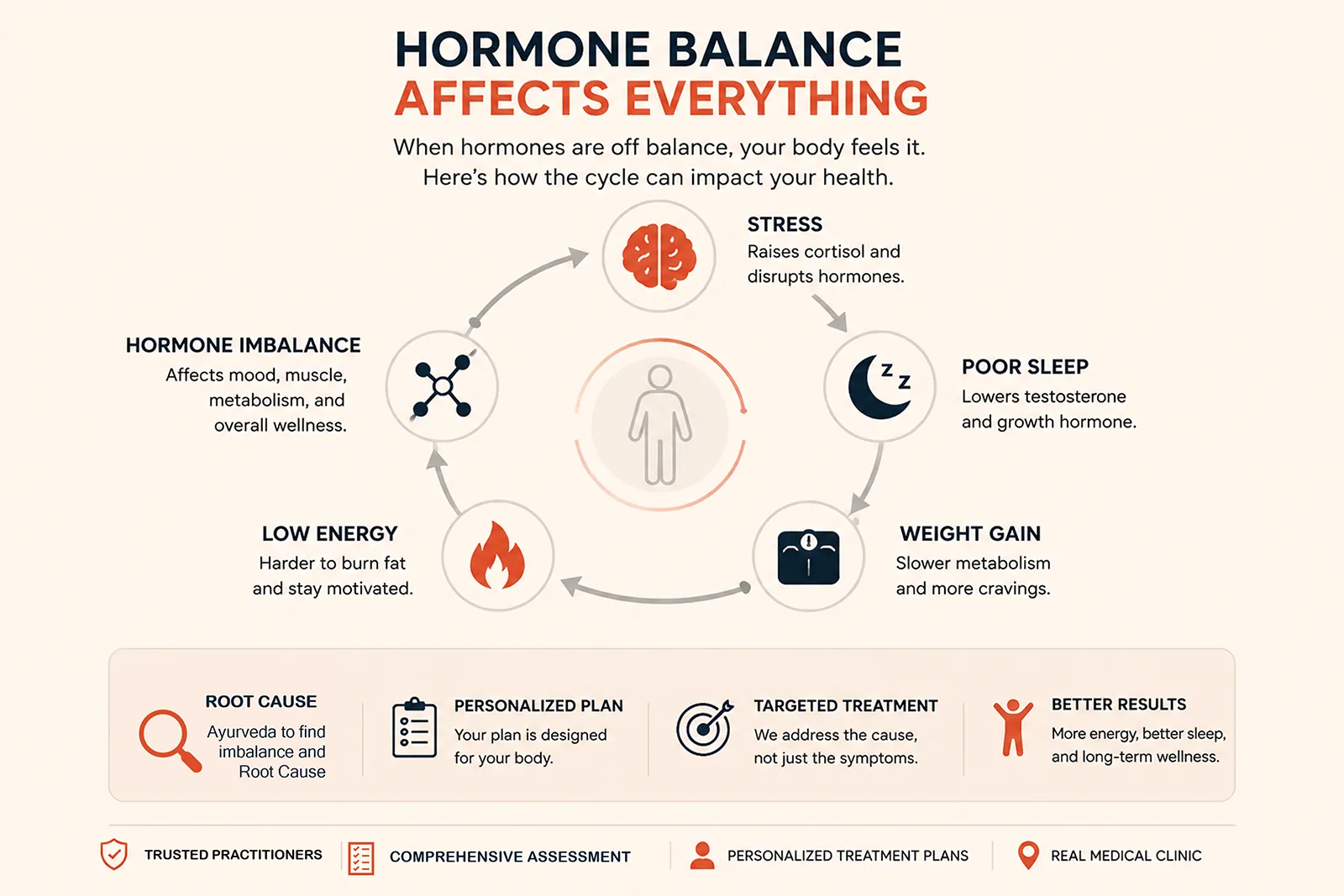
We evaluate your health comprehensively — modern medicine, Ayurveda, diet and lifestyle together — then build a plan of dietary change and supportive herbs to address the drivers, manage the side effects of treatment and help you recover faster.
We work alongside your treating physician — and will never ask you to stop a prescribed medicine on our advice alone. Herbs are medicine, not daily food; what suits one person may not suit another.