Why it matters more than ever
The modern way of living almost seems designed to inflame us. Ultra-processed diets high in sugar and refined oils, sedentary days, broken sleep, relentless stress and a steady exposure to environmental toxins all keep the immune system in a state of quiet alarm. The result is that chronic inflammation is no longer an affliction of old age — it is appearing earlier and more widely than at any time in history.
This matters because chronic inflammation sits upstream of the diseases we fear most. Heart disease, type 2 diabetes, obesity, autoimmune conditions, many cancers and the neurodegeneration behind Alzheimer's and Parkinson's all share it as a common thread. Cool the inflammation at its source, and you address not one disease but the soil in which many of them grow.
Acute inflammation — the healthy kind
We know the acute type well: cut a finger or hurt a knee, and the immune system sends white blood cells and chemical messengers to surround and protect the area, creating redness, warmth, swelling and pain.
This restores injured tissue and fights infection. Inflammation, in its place, is essential to keeping the body safe and healthy.
When inflammation turns chronic
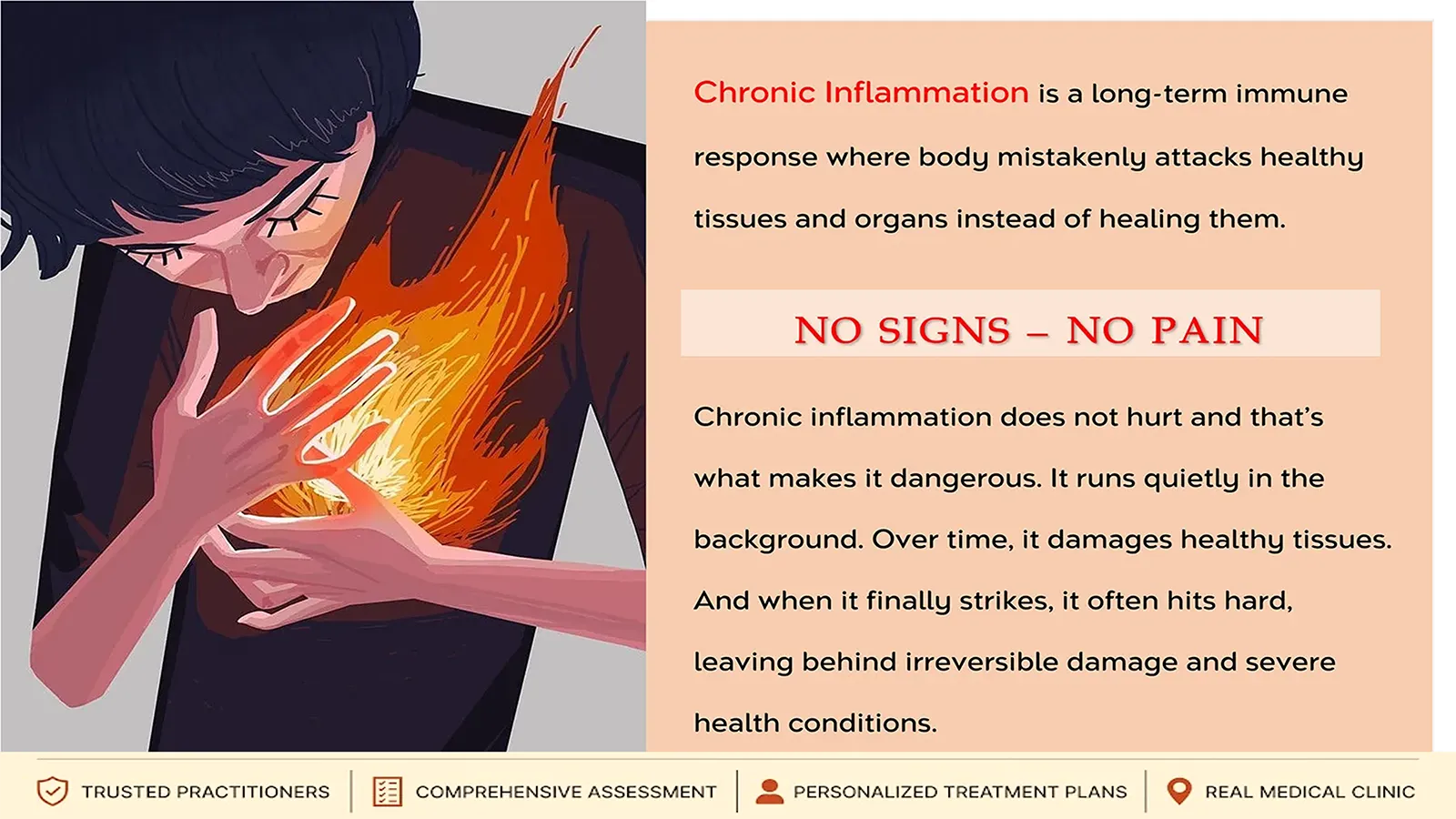
When the immune system is kept in trigger mode, it pumps out white blood cells and messengers indefinitely — as if the body were under constant attack. Those cells can begin attacking healthy tissue, causing destruction, remodelling such as fibrosis, and eventually irreversible loss of organ function.
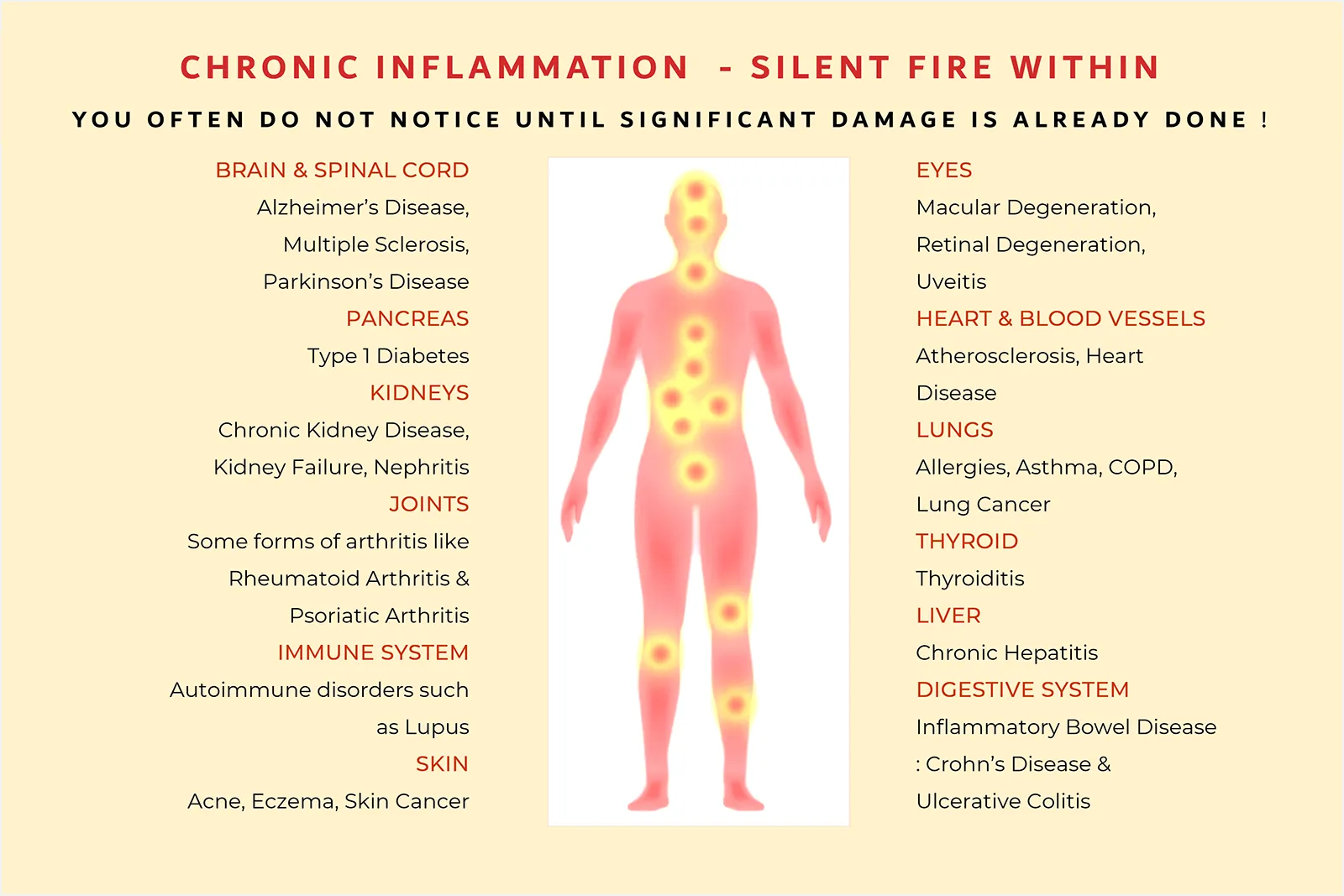
Chronic inflammation is a cardinal sign of ongoing degenerative disease. It is associated with allergies, diabetes, cancer, arthritis, heart disease, bowel disease such as Crohn's and ulcerative colitis, kidney disease, and neurodegenerative conditions like Alzheimer's and Parkinson's.
The trouble is, it's invisible
Unlike acute inflammation, the chronic kind is often "invisible" — inflammation in obesity, diabetes or cardiovascular disease causes no specific symptoms. Degenerative disorders share this common feature, and obesity, ageing and metabolic syndrome are all marked by low-grade chronic inflammation.
Inflammation also precedes most cancers and is considered a hallmark of the process. There is a shared pathology between cancers and metabolic syndrome, and the common pathway is inflammation — a disturbance in micro-channel circulation.
Testing for it
CRP (C-reactive protein), made by the liver, rises when there is inflammation; a high level may signal a serious condition. hs-CRP can even predict heart attack, stroke and sudden cardiac death. But these markers are non-specific — they show that inflammation exists, not its cause, which might be a mild infection or something serious.
Watch for signs of high inflammation: general weakness, fatigue, recurring fever, joint aches, unexplained muscle soreness, persistent chest or abdominal pain, skin rashes, digestive problems and mood changes. The best approach is to get tested, then adjust eating and lifestyle — and take only herbs suited to your condition and body type, never what the internet recommends.
Food as the first medicine
What sits on your plate is one of the most powerful anti-inflammatory tools you have. A diet built on whole, seasonal foods — colourful vegetables and fruit, whole grains, pulses, healthy fats and warming spices such as turmeric, ginger and black pepper — actively lowers the body's inflammatory load, while cutting refined sugar, deep-fried and ultra-processed foods removes what keeps stoking the fire.
Ayurveda has understood this for millennia: it treats food not as fuel alone but as medicine, matched to your constitution, the season and the strength of your digestion. Eaten in the right way, at the right time and in the right measure, food becomes the daily practice that keeps inflammation from taking hold.
Inflammation in Ayurveda
Ayurveda uses terms such as Shotha, Shopha, Svayatu, Utsedha and Samhata for inflammation, and recognises it, and the oedema that accompanies it, as a pathological manifestation — as a symptom of disease, an independent disease, and a complication of disease.
The disturbance in micro-channel circulation is due to Sroto dushti — clogging of the channels by Ama, the toxic waste of metabolism. Blockage of the srotas that nourish the tissues is held to be the root cause of metabolic and degenerative disease, so preventing Ama, and detoxification, hold the key. Through cleansing diets, gentle detoxification and time-honoured herbs, Ayurveda works to clear this Ama, reopen the channels and restore the body's natural balance — treating the root, not merely quieting the symptom.
We help you identify what your body needs — a thorough assessment, attention to the risk factors, the best dietary options, and supportive herbs to manage and reverse the effects of inflammation and help you recover faster. To maintain health and fight disease, the body needs the right nutrients, at the right time, in the right ratio.
We work alongside your treating physician — and will never ask you to stop a prescribed medicine on our advice alone. Herbs are medicine, not daily food; what suits one person may not suit another.