Three vital jobs — waste, blood and blood pressure
The kidneys are far more than a filter. First, they are the body's waste-clearance system: they remove urea, toxins, excess water and impurities from the blood, passing them out as urine, and finely balance sodium, potassium, calcium and phosphorus to keep the body's chemistry in order.
Second, they help generate blood — the kidneys release erythropoietin, the hormone that tells the bone marrow to make red blood cells, which is why failing kidneys so often cause anaemia. Third, they govern blood pressure, both by managing fluid and salt and through the renin system that regulates it; they also activate vitamin D for strong bones. When kidney function falls, all three jobs suffer at once — spreading anaemia, weak bones, high blood pressure and toxin build-up through the whole body.
How modern life is damaging the kidneys
The kidneys bear the brunt of the way we now live. Diets heavy in salt, sugar, processed and packaged food, and animal protein force them to work harder and raise blood pressure, while too little water, sugary and soft drinks, and frequent painkillers (NSAIDs) injure them directly over time. Add rising obesity, diabetes and hypertension — and the sedentary, stressed lifestyle behind them — and the kidneys are quietly overloaded for years.
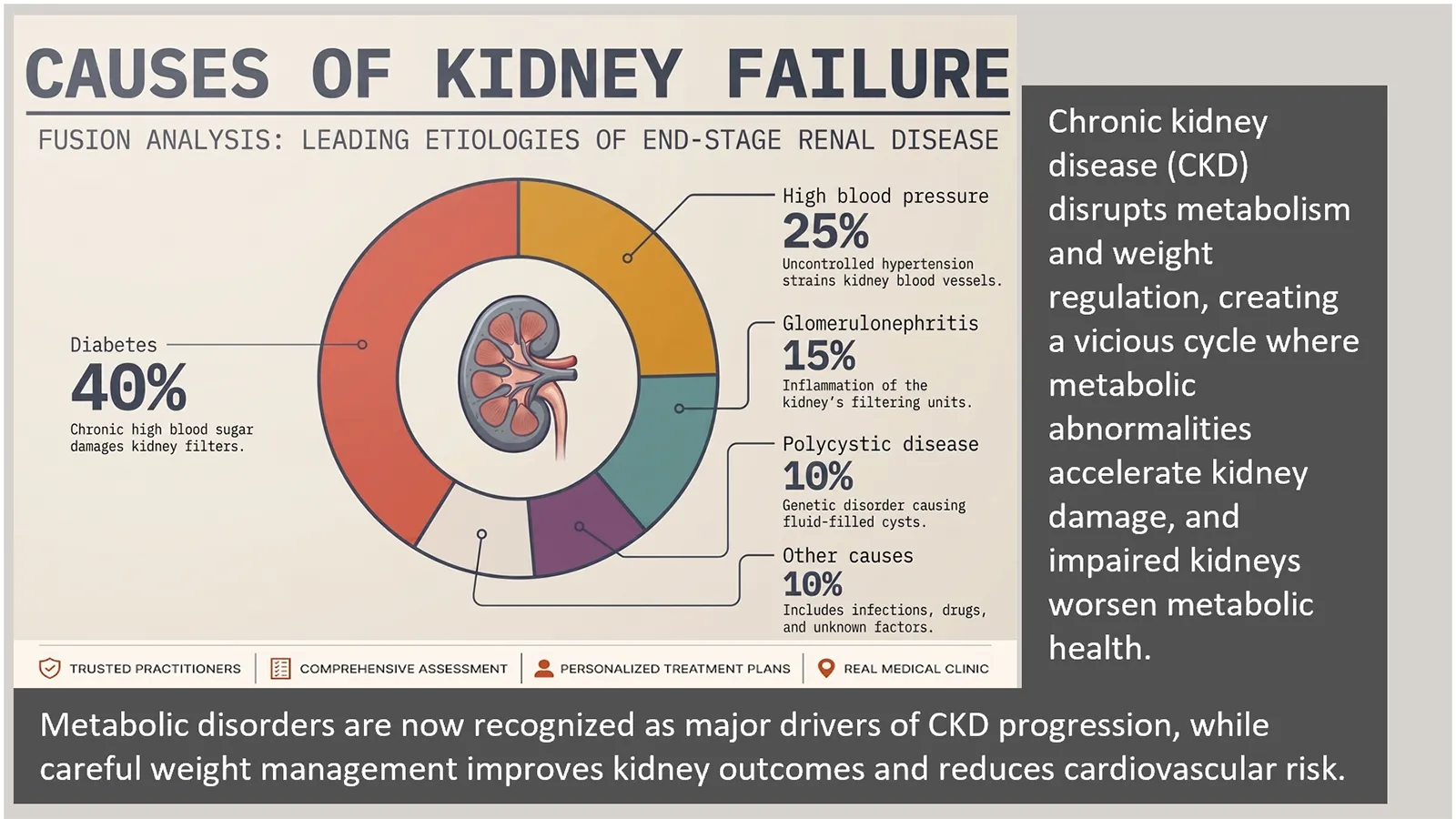
The two biggest drivers, diabetes and high blood pressure, are themselves lifestyle-driven, which is the crucial point: the same habits that damage the kidneys also damage the heart and liver, and managing them protects all three together. Unregulated herbal concoctions and self-medication from the internet add a further, growing burden — one reason kidney care must always be guided and function-first.
Chronic Kidney Disease (CKD) — silent and rising
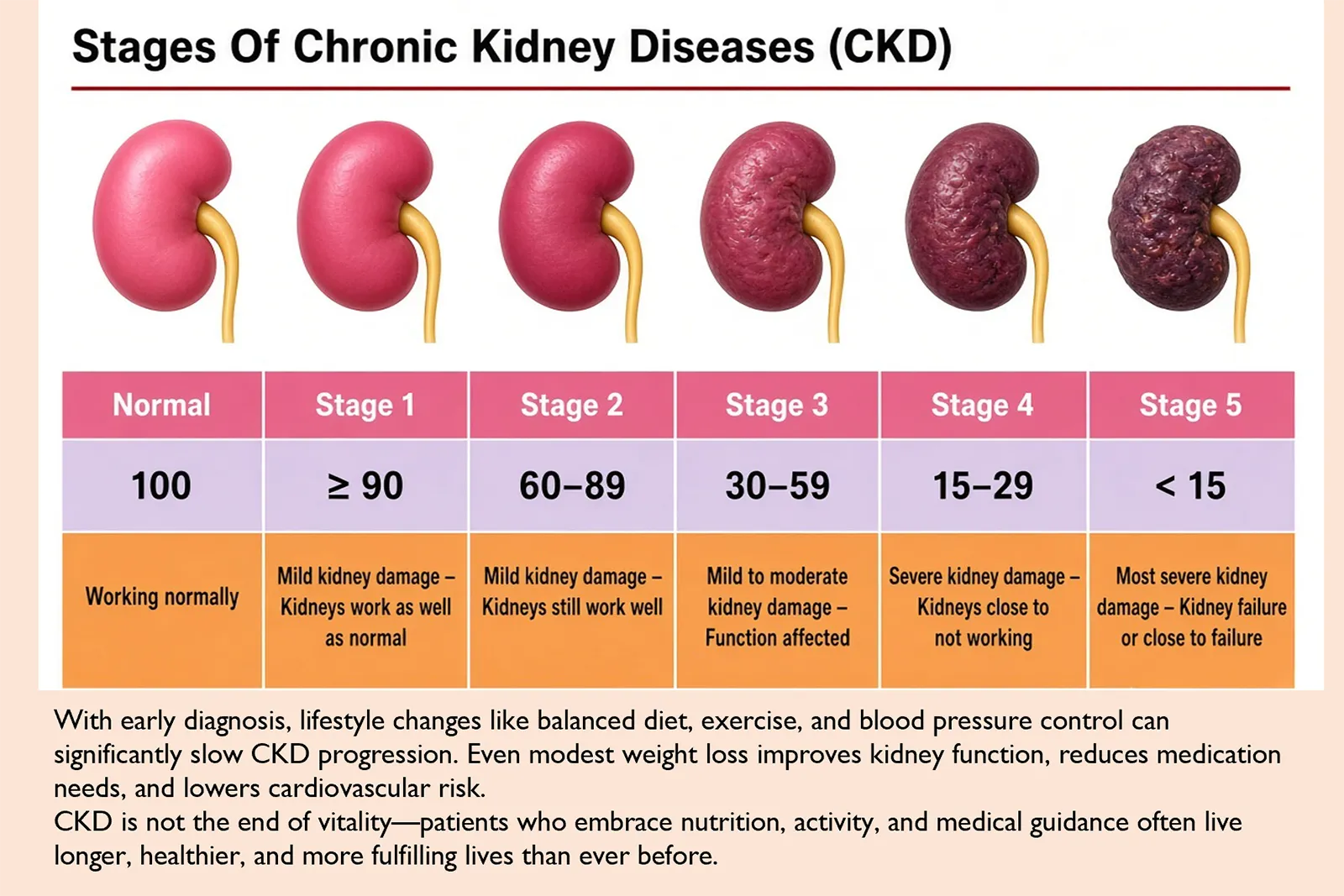
CKD is a long-term condition in which kidney function slowly and progressively declines, and it is becoming far more common as diabetes, hypertension and obesity spread. Its great danger is silence: the kidneys have a large reserve, so a person can lose a substantial share of function while feeling entirely well, with symptoms appearing only at an advanced stage.
As it advances, the complications multiply — anaemia, metabolic and bone disease, heart disease, and dangerous imbalances of electrolytes such as sodium and potassium. There is no quick cure, but CKD is far from hopeless: with the right care its progression can be slowed markedly, complications eased, and the need for dialysis delayed — sometimes for many years.
Diabetic and hypertensive kidney disease
High blood sugar damages the fine filtering vessels of the kidney so they leak and gradually fail — diabetic nephropathy, now a leading cause of kidney disease worldwide. High blood pressure compounds the harm, and the two very often travel together, each accelerating the other.
This is why managing the drivers is inseparable from protecting the kidneys. Steadying blood sugar, controlling blood pressure, calming inflammation and correcting the underlying metabolic problem do more to preserve kidney function than anything aimed at the kidney alone.
The kidney in Ayurveda
In Ayurveda the kidney is Vrikka, and chronic kidney disease is understood as Vrikka Roga. Here Rakta is the prime Dhatu behind the serious signs, and Vata is the predominant dosha, while the Mutravaha and Raktavaha srotas — the channels of urine and blood — are obstructed by accumulated Ama.
Kidney (Vrikka), liver (Yakrita) and heart (Hridaya) are seen as intimately interrelated in its pathogenesis, through vitiation of Rasa, Rakta and the Raktavaha Dhamani. Vrikka Roga is therefore never limited to the kidney — it progressively affects the whole body, which is exactly why Ayurveda treats the person, not just the organ.
How Ayurveda, diet and herbs help
Our approach is careful, function-first and always built around your latest reports. It rests on two pillars. First, a personalised renal diet — carefully managing salt, protein, potassium and phosphorus, and supporting Rasa Poshana (nourishment) — that reduces the kidneys' workload and slows the decline, adjusted precisely to your stage of disease. Second, gently controlling the drivers: steadying blood sugar and blood pressure, reducing weight and calming inflammation, so the forces damaging the kidney are eased at the source.
Alongside this, well-chosen, safe herbs help slow the loss of renal function, reduce toxin load, support red-blood-cell production and ease symptoms — working not only to protect remaining function but, where possible, to help revive struggling kidney tissue. Every recommendation is checked against your kidney function first, and we work hand in hand with your nephrologist, never in place of prescribed treatment or dialysis.
We are Ayurveda doctors: we look for the imbalances and drivers — diabetes, blood pressure, inflammation — that damage the kidneys, and address them through a carefully tailored renal diet and safe, supportive herbs chosen around your health status and reports. Every recommendation is checked against your kidney function first, and we work alongside your nephrologist rather than replacing their care. To maintain health and fight disease, the body needs the right nutrients, at the right time, in the right ratio.
We work alongside your treating physician — and will never ask you to stop a prescribed medicine on our advice alone. Herbs are medicine, not daily food; what suits one person may not suit another.